

saudigastro.com/patients/wilson-disease
Category
Chronic
Red flags
4
This article is educational and does not replace your doctor's advice. Seek urgent care for any red-flag symptoms.
What is it?
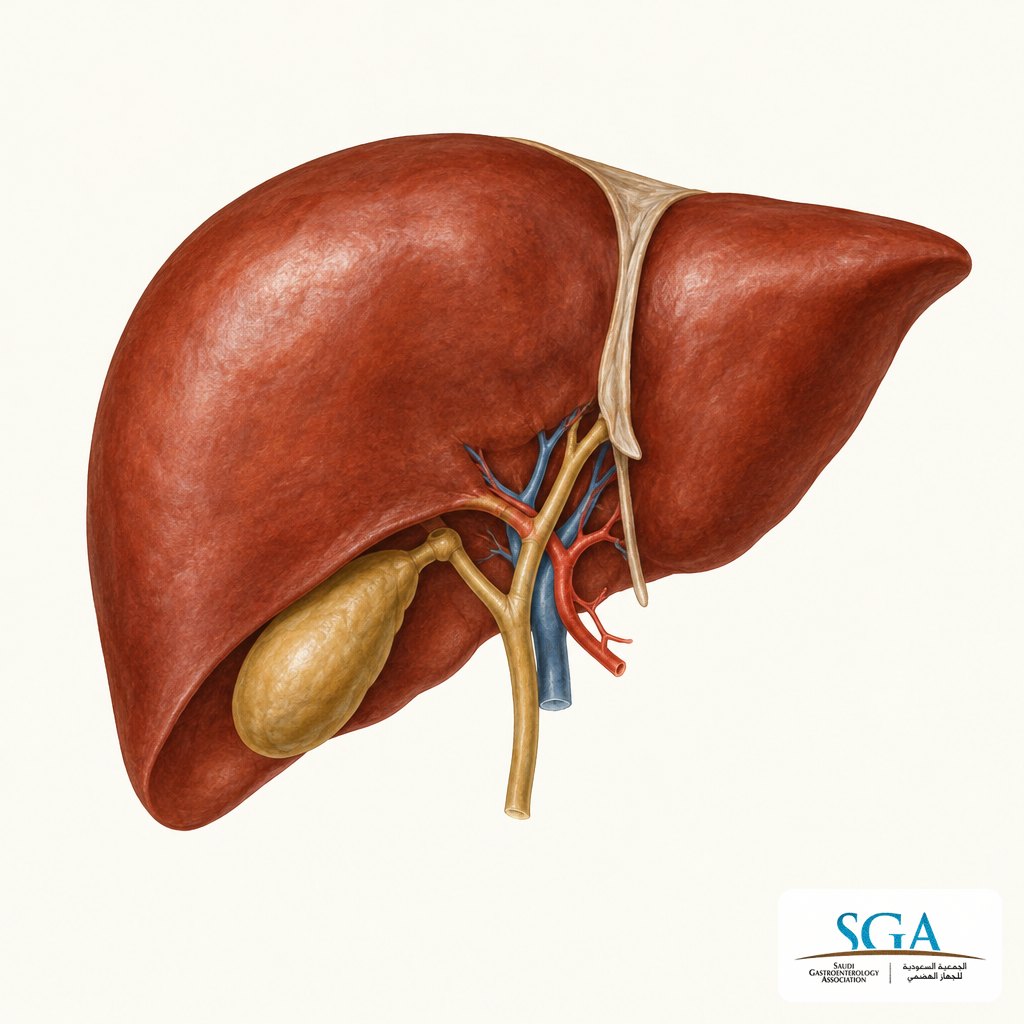
Copper is a mineral the body needs in small amounts. Normally the liver sends extra copper into the bile to be removed in stool. In Wilson disease, this process fails, and copper slowly collects in the liver, brain, eyes and other organs. This can cause liver disease, movement and behavior problems, and a brownish ring at the edge of the colored part of the eye. It is present from birth but may show up at different ages, from childhood to adulthood.
How common is it?
Wilson disease is rare overall. It can be more frequent in communities where marriage between relatives is common, because both parents must carry the gene for a child to be affected. Because it is rare and its signs vary, diagnosis is sometimes delayed.
Why does it happen?
It is caused by changes (mutations) in a gene called ATP7B, which helps remove copper. It is inherited in an autosomal recessive way: a child is affected only if both parents pass on a faulty copy. Parents who each carry one copy are usually healthy. Brothers and sisters of a patient have a chance of being affected and should be tested. It is not caused by diet or by copper in drinking water.
Symptoms
- Liver problems: tiredness, jaundice, abdominal swelling, or abnormal liver tests found by chance
- Tremor, stiffness, clumsiness or slurred speech
- Difficulty swallowing or drooling
- Mood changes, depression, anxiety, or changes in behavior or school performance
- A brownish ring around the colored part of the eye (Kayser-Fleischer ring), seen by an eye doctor
- Anemia from breakdown of red blood cells, or irregular periods and repeated miscarriages
Red flags — seek urgent medical care
Sudden jaundice, confusion, easy bleeding or dark urine
May mean acute liver failure, which can occur in Wilson disease. Go to the emergency department now.
New tremor, speech or walking problems, or sudden mood or behavior change in a young person with liver disease
Could be brain involvement. See a doctor urgently.
Vomiting blood or black stools
Possible bleeding from cirrhosis. Go to the emergency department.
Stopping the treatment or running out of medicine
Stopping can lead to sudden, severe worsening. Contact your doctor right away.
How is it diagnosed?
Diagnosis combines several tests, since no single test is perfect: blood tests for ceruloplasmin (a copper-carrying protein, usually low), copper in a 24-hour urine collection, and an eye examination with a slit lamp for the ring. Genetic testing can confirm the diagnosis and is very useful for testing relatives. A liver biopsy to measure copper may be needed in some cases, and brain MRI if there are neurological symptoms.
Outlook — what to expect
With treatment started early and taken regularly for life, most people live a normal life. Treatment can prevent and often improve liver and brain damage, though improvement can be slow. Left untreated, Wilson disease can be fatal. Missing treatment is the most common cause of relapse.
Treatment
Habits & Lifestyle
Lifelong treatment and regular checks are essential.
- Take your medicine every day exactly as prescribed, and never stop it on your own
- Keep a supply so you never run out, including when travelling or during Hajj and Umrah
- Attend regular blood and urine monitoring
- Have brothers, sisters and sometimes children tested
- Avoid alcohol
Diet
Diet is a support to medicines, not a replacement. Your doctor or dietitian will guide you.
- Limit foods very rich in copper, especially in the early period of treatment: shellfish, liver and organ meats, nuts, chocolate and mushrooms
- Check your drinking water and cookware if your doctor asks you to
- Take zinc or chelating medicines at the times your doctor recommends relative to meals
- Ask before using vitamin or mineral supplements
Medications
Medicines either help the body remove copper (chelating agents) or block its absorption from food (zinc). Your specialist chooses and adjusts them.
- Chelating medicines such as penicillamine or trientine remove copper through the urine
- Zinc salts reduce copper absorption and are often used for maintenance or in people without symptoms
- Side effects need monitoring; tell your doctor about rashes, fever or unusual symptoms
- Treatment continues in pregnancy under specialist guidance; do not stop it yourself
Procedures & Surgery
Most people need no procedure, but some are relevant.
- Liver biopsy in uncertain cases
- Endoscopy and ultrasound if cirrhosis is present
- Liver transplant for acute liver failure or advanced disease that does not respond to medicines
Questions to ask your doctor
Save this list or print it before your appointment — doctors appreciate prepared patients.
- How was my diagnosis confirmed, and does it need genetic testing?
- Which medicine is best for me and what side effects should I watch for?
- Which foods should I limit?
- Should my relatives be tested?
- What should I do if I plan pregnancy or travel?
Was this guide helpful?
Status: Approved for publication by SGA; individual clinician review is ongoing · Published 24/04/2026
For general education only; it does not replace your doctor’s advice. Individual clinician review of this guide is ongoing. SGA clinician? Review this guide