

saudigastro.com/patients/toxic-megacolon
Category
Serious
Red flags
4
This article is educational and does not replace your doctor's advice. Seek urgent care for any red-flag symptoms.
What is it?
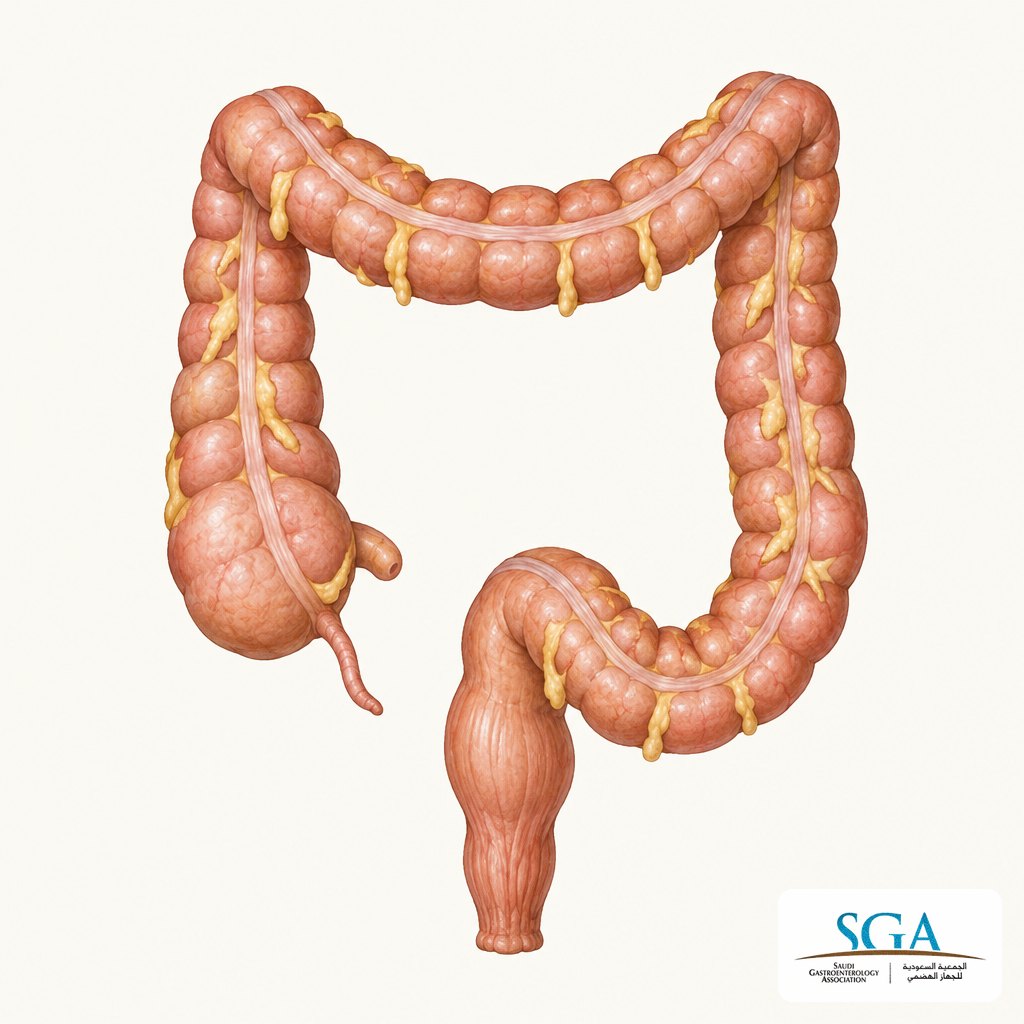
Toxic megacolon means the colon (large bowel) has become widened and has stopped working, together with signs that the whole body is affected, such as fever, fast heartbeat and weakness. The inflamed bowel wall becomes thin and can tear. It is most often a complication of severe ulcerative colitis or Crohn's colitis, or of a severe bowel infection such as Clostridioides difficile infection.
How common is it?
It is uncommon today, because severe colitis is usually treated early, but it remains one of the most serious complications of inflammatory bowel disease and some infections of the colon.
Why does it happen?
Severe inflammation damages the muscle of the bowel wall so that it can no longer push contents along, and the colon fills with gas and widens. Bacteria and toxins may then enter the blood. Risk is higher with a severe flare that is not controlled, a serious infection of the colon, or stopping treatment suddenly. Certain medicines that slow the bowel, such as anti-diarrhea drugs, opioids and anticholinergics, can raise the risk during a severe flare, and a colonoscopy or bowel preparation during a severe flare may also be risky.
Symptoms
- Severe diarrhea, often bloody, that may suddenly lessen as the colon stops moving
- Swollen, tender, distended abdomen
- Abdominal pain that is constant and severe
- Fever and chills
- Fast heartbeat, weakness, dizziness
- Dehydration, confusion or drowsiness
Red flags — seek urgent medical care
Swollen painful belly with fever and fast heartbeat in someone with colitis or severe diarrhea
This may be toxic megacolon. Go to the emergency department or call emergency services immediately; do not wait.
Sudden worsening pain or a rigid, board-like abdomen
The colon may have perforated (torn). Life-threatening emergency.
Confusion, fainting, very low urine output or cold clammy skin
Signs of shock. Call emergency services now.
Diarrhea suddenly stopping while your belly becomes more swollen and you feel worse
This is not an improvement. It can mean the colon has stopped working. Seek emergency care.
How is it diagnosed?
Doctors diagnose it from your symptoms, examination, blood tests showing inflammation or infection, and an abdominal X-ray or CT scan showing a widened colon. Stool tests look for infections. Colonoscopy is avoided because of the risk of perforation.
Outlook — what to expect
It is a dangerous condition, but early hospital treatment can settle the inflammation in some patients. If there is no clear improvement within a short time, or if the bowel perforates, emergency surgery is needed and can be life-saving. Outcomes are better when treatment starts early.
Treatment
Habits & Lifestyle
This is an emergency. There is no home treatment.
- If you have colitis and develop the warning symptoms, go to hospital immediately.
- Do not take anti-diarrhea medicines or strong painkillers during a severe flare unless your doctor tells you to.
- Never stop your colitis medicines on your own.
- Keep your IBD team's contact details at hand and know when to call them.
Diet
Diet is not a treatment for this emergency.
- In hospital you may be given nothing by mouth and fluids and nutrients through a drip.
- Food is restarted gradually once the colon is working again.
- Nutrition support and a dietitian may help during recovery.
Medications
Treatment is given in hospital, often in a specialist unit.
- Intravenous fluids and correction of salts in the blood.
- Intravenous steroids or other anti-inflammatory treatment if the cause is severe colitis.
- Antibiotics when infection or perforation is a concern, or specific treatment if C. difficile is found.
- Medicines to prevent blood clots may be given while you are in bed.
- Rescue medical therapy for severe colitis is chosen by the specialist team.
Procedures & Surgery
Surgery is a key part of treatment when medicines fail or complications occur.
- Emergency surgery is needed for perforation, heavy bleeding, or if the condition does not improve with treatment.
- The usual operation removes the colon, and an ileostomy (a bowel opening on the abdomen collecting waste in a bag) is often created; some patients can have reconnection or a pouch later.
- Stoma nurses and support groups help you live with a stoma.
Questions to ask your doctor
Save this list or print it before your appointment — doctors appreciate prepared patients.
- What caused this episode in my case?
- How do you decide whether I need surgery?
- What will life be like with a stoma, and can it be reversed?
- How can I lower the chance of severe flares in the future?
Was this guide helpful?
Status: Approved for publication by SGA; individual clinician review is ongoing · Published 24/04/2026
For general education only; it does not replace your doctor’s advice. Individual clinician review of this guide is ongoing. SGA clinician? Review this guide