

saudigastro.com/patients/stoma-care
Category
Chronic
Red flags
5
This article is educational and does not replace your doctor's advice. Seek urgent care for any red-flag symptoms.
What is it?
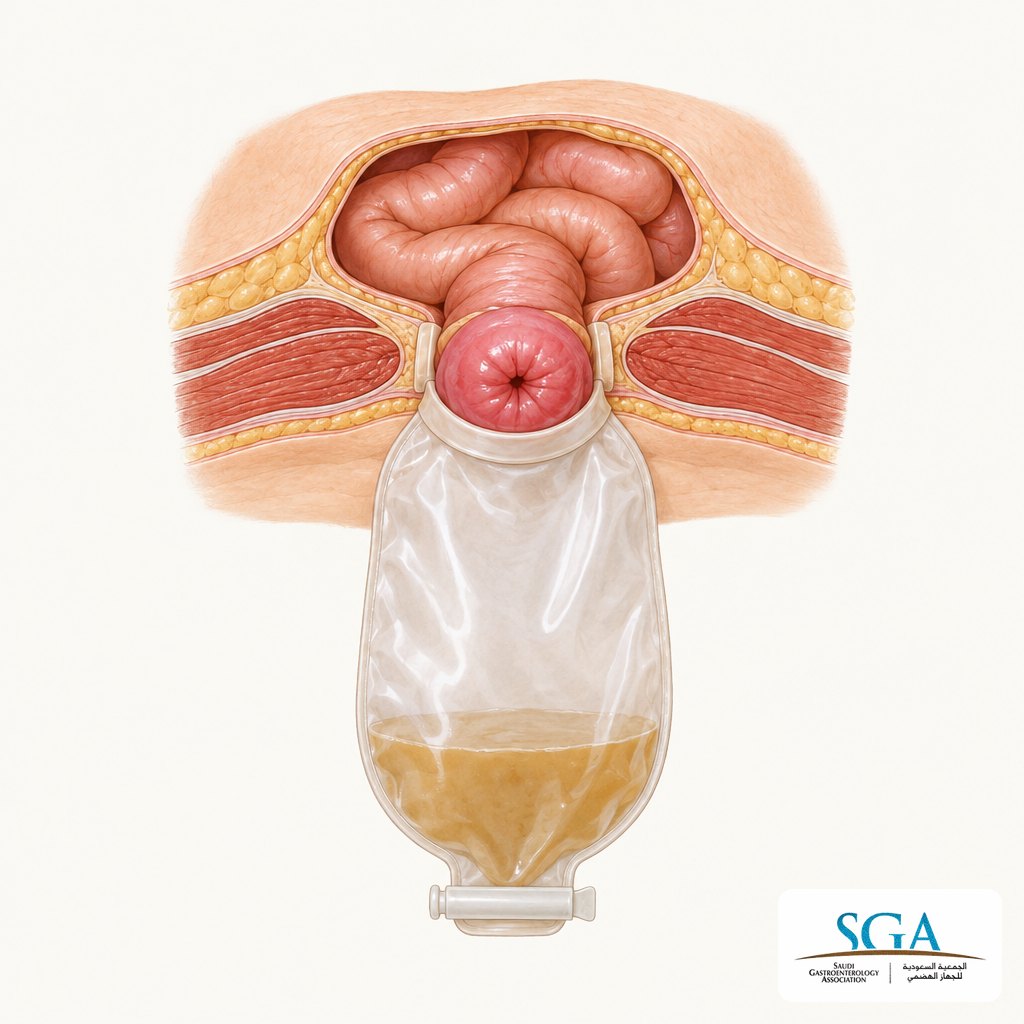
A stoma (from the Greek word for mouth) is an opening that a surgeon creates by bringing a part of the bowel through the abdominal wall. Stool or waste collects in a bag stuck to the skin. An ileostomy is made from the small bowel (ileum) and the output is usually liquid or loose. A colostomy is made from the large bowel (colon) and the output is usually more formed. A stoma may be made because of inflammatory bowel disease, bowel cancer, diverticular disease with complications, injury, blockage, or to protect a joining of the bowel (an anastomosis) while it heals. It can be temporary (planned to be reversed after healing) or permanent. A normal stoma is pink or red, moist and has no feeling of pain because the bowel lining has no pain nerves. This guide is about stomas of the digestive tract. A urostomy (for urine) is a different type, so ask your stoma nurse if you have one.
How common is it?
Many thousands of people live with a stoma. They are of all ages, from children to older adults. Some stomas are temporary, and many people go on to have them reversed.
Why does it happen?
A stoma is made when the bowel cannot be used normally or needs to rest or be bypassed. Reasons include severe Crohn’s disease or ulcerative colitis, bowel cancer, complicated diverticulitis, bowel obstruction or perforation, severe injury, bowel problems from radiation, and problems at the anus or rectum. A temporary loop stoma is often made to protect a newly joined section of bowel so it can heal. Your surgeon will explain why you need yours and whether it can be reversed.
Symptoms
- Normal: a stoma that is pink to red, moist and slightly shiny, and may bleed lightly when rubbed
- Normal: the stoma gets smaller in the first 6 to 8 weeks as swelling settles
- Normal: passing wind into the bag, and some noises, which you cannot control
- Normal: output is liquid-to-porridge with an ileostomy and more formed with a colostomy
- Problem: sore, red, weeping or itchy skin around the stoma, or leaks under the bag
- Problem: a bulge near the stoma (hernia) or stoma that is sticking out further than usual (prolapse)
- Problem: very high output, thirst, cramping or feeling faint, which may mean dehydration
Red flags — seek urgent medical care
Stoma that is dark purple, brown or black, or very pale
The blood supply may be reduced. This is an emergency. Seek care at once.
No output for more than 24 hours with cramping pain, swollen belly and vomiting
May be a blockage of the bowel. Go to the emergency department.
Signs of dehydration: very high watery output, thirst, dark or little urine, dizziness, muscle cramps
Salts and fluid are lost quickly with ileostomy. Contact your care team or emergency services promptly.
Fever, spreading redness, pus or severe pain around the stoma
May be an infection or abscess and needs prompt treatment.
Stoma retracted below the skin, a large or painful bulge that cannot be eased back, or heavy bleeding from the stoma
Could be a complicated hernia, prolapse or bleeding. Seek urgent medical care.
How is it diagnosed?
There is no single test. Your surgeon and a specialist stoma nurse assess the stoma and the skin around it at regular visits: its colour, size and shape, how the bag fits, the type and amount of output, your weight, fluid intake and urine, and any pain or skin damage. Blood tests may be taken for dehydration, salts (such as sodium and potassium), kidney function and vitamin B12 (especially after surgery on the end of the small bowel). A scan may be needed for a suspected hernia or blockage. The team also decides, over time, whether the stoma can be reversed, based on why it was made and your general health.
Outlook — what to expect
Most people adjust well within a few months and return to work, exercise, travel and relationships. Learning to look after the stoma gets easier with practice and the support of a stoma nurse. Temporary stomas are often reversed some months after the first operation, depending on healing and the underlying illness. Permanent stomas are life-changing at first but very manageable long term.
Treatment
Habits & Lifestyle
Confidence grows with practice. Your stoma nurse will teach you and give you a plan before you leave the hospital.
- Empty the bag when it is about one-third to one-half full, and change the whole appliance as often as your nurse advises. A bag that is too full can pull off and leak.
- When changing: wash the skin with warm water (soap is not needed, and avoid scented or oily products), pat dry, and cut the opening of the base plate to fit the stoma. Gentle removal using adhesive remover helps protect the skin.
- You can shower or bathe with the bag on or off; water does not enter the stoma. Rinse away soap residue so the bag sticks well.
- Wear what you like. High-waisted, soft clothing is comfortable, and a stoma support garment can help prevent a hernia. Avoid belts or tight bands over the stoma.
- Travel: carry double the supplies you expect to need in your hand luggage, as well as a supply of spares, a travel certificate or doctor’s letter, and wipes. In hot weather, keep supplies cool, as heat and sweat may loosen the adhesive. For Hajj and Umrah, plan toilet access, carry water and extra supplies, and ask your team in advance.
- Be active. Gentle exercise and walking are encouraged. For the first 6 to 12 weeks after surgery avoid heavy lifting as your surgeon advises, to reduce the risk of hernia.
- Talk to your partner, family or a support group about how you feel. Feeling anxious or low at first is common and help is available.
Diet
Most people can eat a normal, varied diet. Hydration matters most, especially with an ileostomy.
- Drink enough fluid through the day (often 1.5 to 2 litres, more in hot weather or with high output). Add salt to meals unless your doctor has advised otherwise. Your team will tell you what is right for you.
- High-output stoma (more than about 1.5 litres a day from an ileostomy): drink an oral rehydration solution rather than plain water, and sip drinks slowly. Plain water or tea in large amounts can make output worse. Contact your team the same day because medicines and salt replacement may be needed.
- Ileostomy blockage: chew food very well and eat slowly. Foods that can block include nuts, seeds, skins of fruit and vegetables, raw celery, sweetcorn, mushrooms, coconut, dried fruit, popcorn and tough meat gristle. Introduce them one at a time in small amounts, after a few months, once healed.
- Gas and odour: eat regular meals and chew with your mouth closed; avoid fizzy drinks and chewing gum. Foods that may increase gas include beans, onions, cabbage, and fizzy drinks. Foods that may reduce smell include yoghurt and parsley, and odour-neutralising bag products can help. Vent or change the bag as taught.
- Colostomy: constipation or loose output can both occur. Fibre and fluids usually help constipation; ask your team before using laxatives.
- Do not follow strict restrictive diets or detox products. If you lose weight unintentionally, tell your team and ask for dietitian support.
Medications
Medicines are used to control output, protect the skin, and prevent problems. Always check with your doctor, stoma nurse or pharmacist before starting or stopping anything, as some tablets (for example slow-release or coated tablets) may not be absorbed well with an ileostomy.
- Loperamide can thicken the output of an ileostomy, but use it only on the advice of your doctor or stoma nurse. Do not use it if there is a blockage, fever, or blood.
- Skin barrier products (barrier films, rings, pastes or powders) protect the skin and fill uneven areas. Your nurse will choose the products that suit you.
- Treat skin infection or rash only as advised; do not apply creams under the base plate unless your nurse says so, as they stop it sticking.
- If you take medicines for another illness (for example inflammatory bowel disease, diabetes, heart or blood pressure), ask whether the dose or form needs adjusting with your stoma.
- Supplements such as vitamin B12 or electrolyte replacement may be advised if tests show low levels.
Procedures & Surgery
Regular review by a stoma nurse is the most important “procedure”. Surgery is considered for reversal or for complications.
- Stoma nurse review before surgery (to mark the best site), soon after surgery, and then regularly and whenever you have a problem. Nurses can resize the appliance, treat skin problems and teach you.
- Reversal surgery (closing the stoma and rejoining the bowel) is possible for many temporary stomas after healing, often several months later. It is not possible or advised for everyone; your surgeon will discuss the benefits and risks, including the risk of bowel function changes afterward.
- Hernia repair (a bulge next to the stoma, called a parastomal hernia) is considered if it is painful, causes leaks or blockage, or interferes with life. Surgery is not always needed; support belts help in some people.
- Prolapse (stoma sliding out), retraction, narrowing or severe skin problems may need a minor operation or revision.
- Stoma care education sessions and peer support groups, if available, can build confidence.
Living with the condition
- Keep a spare set of supplies at home, at work, and in the car. Check the appliance regularly for leaks.
- Most people can return to work, sports (with advice for contact sports), swimming, intimacy and normal family life. Speak openly with your partner and care team.
- Religious practice: ask your care team and a trusted religious scholar about prayer, ablution (wudu) and fasting; many scholars give simple guidance for people with a stoma. Plan emptying the bag before prayer where possible.
- Pregnancy, travel, and changes in weight may change how the appliance fits; ask your nurse for a re-measure.
- Support from other people living with a stoma can make a big difference.
In the Saudi context
Hot weather, sweating and long travel can loosen appliances and increase fluid loss, so carry extra supplies and keep up your fluids. Ask your hospital whether a stoma nurse clinic and supplies are provided through your health coverage, and plan supplies well before Hajj, Umrah or summer travel. Many people find it easier to talk about stoma care with a nurse of the same gender; you can request this.
Questions to ask your doctor
Save this list or print it before your appointment — doctors appreciate prepared patients.
- Is my stoma temporary or permanent, and when could it be reversed?
- How often should I change and empty my bag, and is my appliance the right size?
- How much should I drink, and when is my output too high?
- Which foods may block my ileostomy?
- Which medicines are safe and well absorbed with my stoma?
- Who do I call if I have a leak, skin problem or blockage out of hours?
Trusted resources
Was this guide helpful?
Status: Approved for publication by SGA; individual clinician review is ongoing · Published 24/04/2026
For general education only; it does not replace your doctor’s advice. Individual clinician review of this guide is ongoing. SGA clinician? Review this guide