

saudigastro.com/patients/ramadan-and-gi-conditions
Category
Common
Red flags
5
This article is educational and does not replace your doctor's advice. Seek urgent care for any red-flag symptoms.
What is it?
Ramadan fasting means no food, drink or oral medicine from dawn to sunset for about a month. For a healthy person this is generally safe. For someone with a digestive or liver condition, fasting changes when and how you eat, drink and take medicines, and for some conditions it can be risky.
Islam allows exemptions for people who are ill, or for whom fasting would cause harm, and the choice should be made calmly, with your doctor and, if you wish, a religious scholar. Not fasting for medical reasons is allowed and is not a failing. This article is general information; your doctor knows your situation.
How common is it?
A very large number of Muslim patients wish to fast, including many with long-term digestive and liver conditions. Many can fast safely with preparation, while a number should not fast or should fast only with specialist guidance. We do not quote a figure for Saudi Arabia.
Why does it happen?
Fasting can affect your condition in several ways: long gaps without fluid can cause dehydration (especially in hot weather or with diarrhoea), medicines timed around meals may need to be rearranged, large iftar meals can trigger reflux or bloating, changed sleep and routines can disturb the bowel, and in some conditions (for example advanced liver disease, bleeding risk, short bowel syndrome or intravenous nutrition) the body has little reserve.
Symptoms
- Dehydration signs: strong thirst, dark urine, dizziness, headache, dry mouth, very little urine
- Heartburn, acid taste, chest burning or belly pain after iftar or at night
- Constipation from low fluids, less fibre or changed routine
- Bloating, gas, or IBS flare after heavy, fried or sugary meals
- Nausea or stomach pain when the stomach is empty (possible ulcer or gastritis)
- Low energy, shakiness or sweating (low blood sugar), particularly in people with diabetes
- Worsening of your usual symptoms: diarrhoea, pain, jaundice or swelling, especially when medicines were missed or delayed
Red flags — seek urgent medical care
Vomiting blood, black tarry stools, or fresh blood from the back passage
Possible GI bleeding. Break your fast and go to the emergency department immediately.
Severe dehydration: fainting, confusion, very little urine, fast heartbeat, or constant vomiting or diarrhoea
Break the fast, drink fluids, and seek medical care. Fasting should not continue.
Severe or worsening belly pain, vomiting that will not stop, or a swollen hard belly
Could be an ulcer complication, blockage, or other emergency. Break the fast and seek urgent care.
If you have liver disease: confusion or unusual sleepiness, rapidly increasing belly swelling, new jaundice, or fever
May signal liver failure, infection or other complication needing urgent treatment.
Severe low blood sugar symptoms (shaking, sweating, confusion), or a flare of colitis (many bloody stools, fever)
Break the fast and contact your doctor; do not wait for sunset.
How is it diagnosed?
There is no test for "fitness to fast"; it is a medical decision made with your doctor before Ramadan, ideally 1 to 2 months ahead. Your doctor reviews your condition, recent flares or bleeding, blood tests, medicines and other illnesses such as diabetes or kidney disease.
PLEASE ASK YOUR DOCTOR BEFORE FASTING if you have: cirrhosis with fluid in the abdomen (ascites) or enlarged veins that can bleed (varices); a recent GI bleed; a recent severe flare of Crohn's disease or ulcerative colitis, or are starting new treatment; short bowel syndrome or intravenous nutrition; diabetes treated with insulin or tablets, especially if you also have digestive problems; a peptic ulcer or a history of ulcer bleeding; a recent operation or hospital stay; pregnancy; a transplant; or medicines that must be taken at fixed times or with food. Also ask if you have kidney stones or are prone to dehydration.
A group of people for whom fasting is often discouraged includes decompensated cirrhosis, active bleeding, and severe inflammatory bowel disease flares. Your doctor will say which group you belong to. A person with stable, well-controlled disease often can fast with a modified plan.
Outlook — what to expect
With preparation, many people with stable conditions fast without problems, and many say they feel supported by taking part with family and community. If you start fasting and your doctor has agreed, stay in touch and be willing to break the fast if you feel unwell. Breaking the fast for health reasons is allowed and, for those for whom fasting is unsafe, encouraged. Make-up fasting or other options can be discussed later with your doctor and a religious scholar.
Treatment
Habits & Lifestyle
Plan ahead, keep to a steady routine, and listen to your body.
- Visit your doctor 1 to 2 months before Ramadan to review the plan, medicines and whether fasting is advisable for you.
- Do NOT change, skip, double or move your medicines by yourself. Ask your doctor or pharmacist for a Ramadan schedule for each medicine, including liver, IBD, diabetes, blood-pressure, blood-thinner and acid medicines. Some can be adjusted, some cannot, and some need to be taken with food or fluid.
- Sleep as regularly as you can, take short rests, avoid heavy exercise or heat during fasting hours, and take gentle walks after iftar.
- Stop smoking and shisha if you can, since cravings and acid may worsen in the evening.
- BREAK THE FAST if you feel unwell: dehydration, bleeding, vomiting, severe pain, fainting, a flare, or low blood sugar. This is allowed and safe; do not push on.
Diet
Aim for a balanced, gentle, hydrating pattern, not a feast. These ideas suit most people, but follow your doctor or dietitian's advice if you have a special diet (for example, low-salt for liver disease or gluten-free for celiac disease).
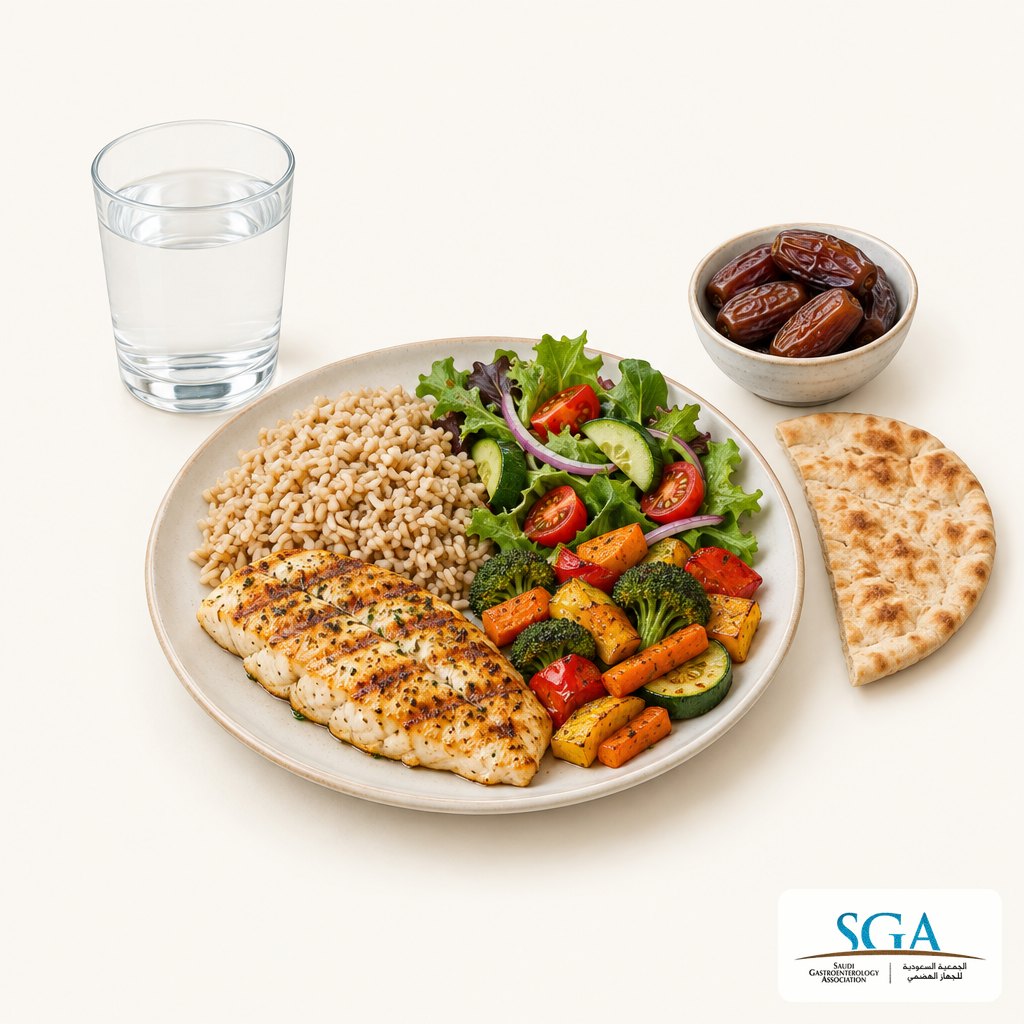
- Iftar: start gently with water, a few dates and a light soup, pray, then eat a balanced meal (grilled or baked protein, vegetables, rice or potatoes, salad). Avoid eating very large amounts quickly.
- Suhoor: do not skip it. Choose slow-digesting foods such as oats or wholegrain options (if you tolerate them), eggs, yoghurt or labneh, legumes such as ful, vegetables and fruit; take it as late as is practical, but do not lie down straight after eating.
- Hydration: between iftar and suhoor, drink water steadily (small amounts often rather than a lot at once); soups, fruit and vegetables help too. Limit tea, coffee and cola, which are dehydrating and can worsen reflux; avoid sugary drinks. If you have liver disease, heart or kidney disease, or a fluid limit, ask how much to drink.
- Reflux: avoid fried foods (sambousa, pakora, fried pastry), spicy and very fatty dishes, chocolate, mint, and large sugary sweets close to bedtime; eat smaller portions; wait 2 to 3 hours before lying down; raise the head of the bed.
- Constipation: eat fibre (vegetables, salad, fruit, legumes, prunes, whole grains), drink enough fluid in the evening, and walk after iftar. For IBS, keep meals small and regular, limit your known triggers, caffeine and heavy sweets, and avoid skipping suhoor.
- Liver disease: follow your low-salt and protein advice, and avoid very salty pickles, dried fish and processed meats. Do not use herbal or "liver tonic" remedies. People with diabetes should ask for a food and glucose-monitoring plan.
Medications
Medicines are the most important thing to plan with your doctor. Many can be shifted to suhoor and iftar, but some cannot, and a wrong change can cause harm. We do not give timings here.
- Bring a list of ALL your medicines (including vitamins, herbs and over-the-counter items) to your doctor or pharmacist and ask for a written Ramadan plan.
- Time-critical medicines (for example immune-suppressing drugs after transplant, certain IBD medicines, antiviral drugs for hepatitis, diabetes medicines, blood thinners) must not be stopped or taken irregularly without advice.
- Acid-reducing medicines, if prescribed, may be rearranged to suit suhoor and iftar; ask when and how to take them.
- Avoid over-the-counter anti-inflammatory painkillers such as ibuprofen without advice, because they can irritate the stomach and cause ulcers and bleeding, especially on an empty stomach. Do not use laxatives or anti-diarrhoea tablets regularly without advice.
- Injectable or infusion treatments are generally not affected by fasting, but ask your doctor whether the timing or the way you feel after them is relevant.
Procedures & Surgery
Procedures and tests need planning around the fast. Ramadan may not be the best time for non-urgent ones.
- Non-urgent endoscopy or colonoscopy is often best scheduled outside Ramadan, because preparation involves fluids, bowel-cleansing medicines, and fasting rules that may not be compatible; ask your doctor.
- Urgent procedures (for example for bleeding) should never be delayed because of fasting.
- If you are on intravenous nutrition or fluids, do not fast without a clear plan from your team.
- Routine blood tests or monitoring may be needed more often during Ramadan; ask your doctor.
Living with the condition
- Tell your family where your medicines are, which signs mean breaking the fast, and who to call.
- If you cannot fast, you are not alone, and there are other ways to share in the month, such as prayer, charity, family meals and reading. Speak with your doctor and a religious scholar about what applies to you.
- After Ramadan, see your doctor to review how it went and adjust the plan if needed, including returning to your usual medicine times.
- Hot weather, whether during Ramadan or Hajj and Umrah, increases the risk of dehydration. Talk to your doctor beforehand about medicine and fluid planning.
In the Saudi context
Ramadan tables in Saudi Arabia often include dates, soup, sambousa, harees, kunafa and sweet drinks, and iftar can be large and late-night gatherings common. A few simple swaps (more grilled food, salad, soup, fewer fried items and sweets) help digestion. Many hospitals and primary care centres offer pre-Ramadan advice, especially for diabetes; ask your clinic whether a similar service is available for digestive and liver conditions.
Questions to ask your doctor
Save this list or print it before your appointment — doctors appreciate prepared patients.
- Is it safe for me to fast this Ramadan, given my condition and recent tests?
- How should my medicines be timed during Ramadan, and which ones must not be changed?
- Which symptoms mean I should break my fast and contact you or go to hospital?
- Do I need a special diet, fluid limit or blood test plan during the month?
- Should my tests or procedures be scheduled before or after Ramadan?
Was this guide helpful?
Status: Approved for publication by SGA; individual clinician review is ongoing · Published 24/04/2026
For general education only; it does not replace your doctor’s advice. Individual clinician review of this guide is ongoing. SGA clinician? Review this guide