

saudigastro.com/patients/proctitis
Category
Common
Red flags
5
This article is educational and does not replace your doctor's advice. Seek urgent care for any red-flag symptoms.
What is it?
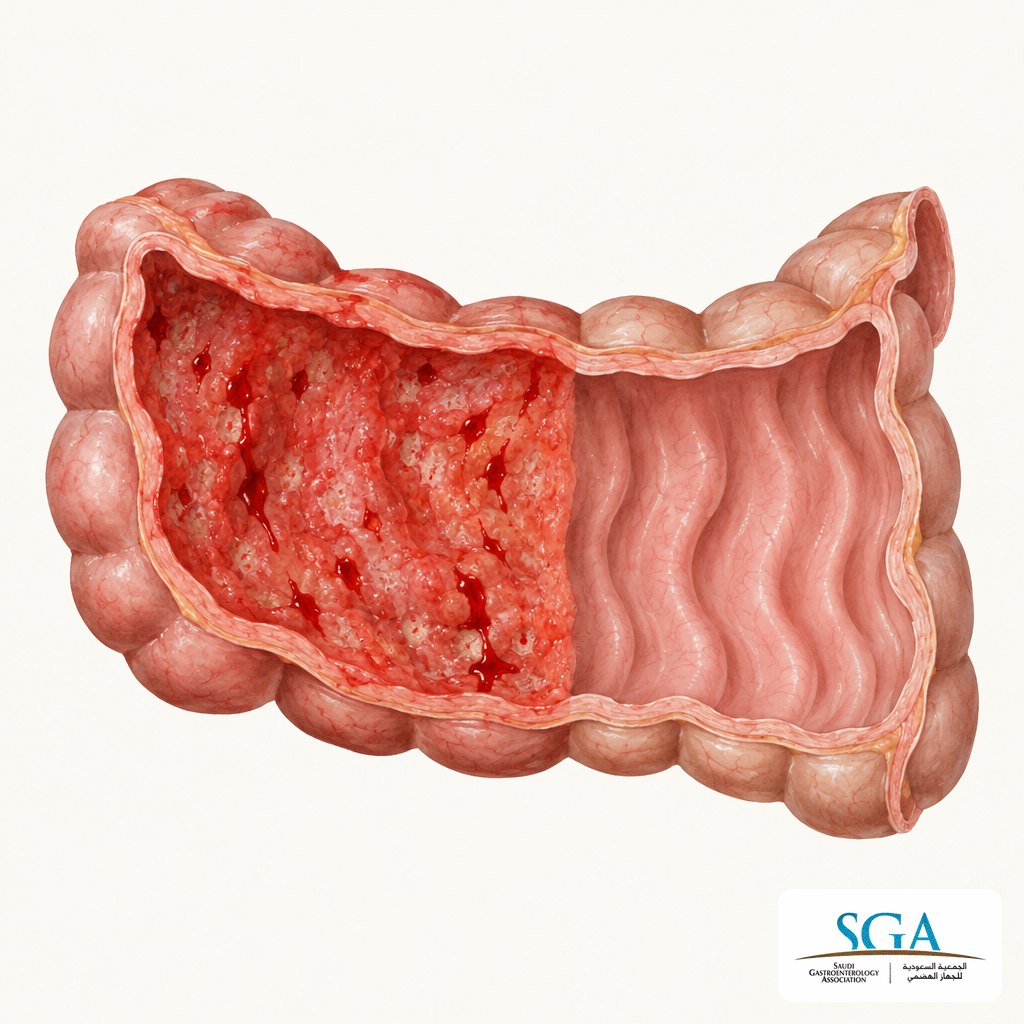
The rectum is the lowest part of the large bowel, just above the anus. Proctitis (say "prok-TY-tis") means this lining is inflamed, red, sore and may bleed or produce mucus. It may be short-term (acute) or last for a long time (chronic). Because many different problems can cause it, finding the cause is the key step.
How common is it?
Proctitis is fairly common. Ulcerative colitis, an inflammatory bowel disease, commonly begins in the rectum, and infections are an important cause in people who have anal sex. Radiation proctitis can follow radiotherapy to the pelvis, such as for prostate, cervical or other cancers.
Why does it happen?
Common causes include ulcerative colitis or Crohn's disease; infections, including sexually transmitted infections (such as gonorrhoea, chlamydia, herpes and syphilis), and bowel infections; radiation to the pelvis; reduced blood supply to the rectum, especially in older people; allergic proctitis in babies; and some medicines or enemas. Straining and long-term constipation can irritate the rectum too. In all cases a doctor must find out which of these applies.
Symptoms
- A frequent urge to pass stool, often with little coming out (tenesmus)
- Blood or mucus in or on the stool
- Pain or discomfort in the rectum or the anus
- A feeling that the bowel is not fully emptied
- Diarrhoea or, in some people, constipation
- Discharge of pus from the anus with some infections
- Leaking of stool or urgency that is hard to control
Red flags — seek urgent medical care
Heavy bleeding, passing large clots, or feeling faint or dizzy
Significant blood loss can occur. Go to the emergency department now.
Fever, severe belly pain, or a swollen, hard belly
Could mean severe inflammation or infection spreading. Seek emergency care.
Blood in the stool that continues, or a change in bowel habit lasting more than a few weeks
Needs examination of the rectum to find the cause. Book a medical review soon.
Anal discharge, sores or ulcers after unprotected sex
May be an infection that needs testing and treatment, and partners may need treatment too. See a doctor promptly.
A baby with blood or mucus in stool who is unwell, feeding poorly, vomiting, or has a swollen belly
Babies who are unwell need to be seen by a doctor immediately; go to the emergency department.
How is it diagnosed?
The doctor asks about your symptoms, sexual history, past treatments such as radiotherapy, and medicines, and examines the anus and rectum. A look inside with a flexible sigmoidoscopy or colonoscopy usually shows the inflamed lining, and biopsies are taken. Stool tests and swabs look for infection, and blood tests may check for inflammation or anaemia. Questions about sexual practices are asked only to find the right test and are kept confidential. The doctor decides which tests you need.
Outlook — what to expect
The outlook depends on the cause. Infectious proctitis usually clears with the right treatment. Proctitis from ulcerative colitis often responds well to treatment but can recur and needs long-term follow-up. Radiation proctitis may settle gradually, though some people have symptoms for a long time and need specialist care.
Treatment
Habits & Lifestyle
Treat the cause first. These steps support comfort and recovery.
- See a doctor for any rectal bleeding or ongoing rectal symptoms
- Do not use enemas, creams or leftover medicines without advice
- Warm sitz baths and gentle cleaning with water can soothe soreness
- If an infection is found, complete treatment and avoid sex until your doctor says it is safe; partners may need testing
- Do not smoke; it can worsen some bowel conditions
Diet
Diet does not cure proctitis but can ease symptoms while it heals.
- Drink plenty of fluids, especially with diarrhoea
- Eat small, regular meals; avoid foods you notice make symptoms worse
- Keep stools soft and easy to pass with enough fibre if constipated
- For babies, never change feeds or give home remedies without a doctor's advice
Medications
Medicines depend on the cause; your doctor chooses and prescribes them.
- For ulcerative proctitis: anti-inflammatory suppositories or enemas, and sometimes tablets or other bowel-disease medicines
- For infection: the right antibiotic or antiviral medicine for the organism found
- For radiation proctitis: anti-inflammatory treatments and treatment of bleeding or anaemia
- Stool softeners if straining is part of the problem
- Take medicines exactly as prescribed even when symptoms settle, unless your doctor says otherwise
Procedures & Surgery
Procedures are needed only for particular causes or when medicines are not enough.
- Sigmoidoscopy or colonoscopy to confirm the diagnosis and take biopsies
- Endoscopic treatment of bleeding blood vessels in radiation proctitis, such as argon plasma coagulation
- Treatment of complications such as narrowing (stricture) or fistula, if they occur
- Surgery is rarely needed and is reserved for severe or complicated cases
Living with the condition
- Keep follow-up visits, particularly if you have ulcerative colitis or had radiotherapy
- Report returning bleeding, mucus or urgency early
- Talk openly with your doctor; questions about infections are for your care and are confidential
Questions to ask your doctor
Save this list or print it before your appointment — doctors appreciate prepared patients.
- What is causing my proctitis?
- Do I need a scope examination or other tests?
- Which treatment do you recommend and for how long?
- Could this be ulcerative colitis, and will it spread higher up the bowel?
- Does my partner need testing or treatment?
Was this guide helpful?
Status: Approved for publication by SGA; individual clinician review is ongoing · Published 24/04/2026
For general education only; it does not replace your doctor’s advice. Individual clinician review of this guide is ongoing. SGA clinician? Review this guide