

saudigastro.com/patients/primary-sclerosing-cholangitis
Category
Chronic
Red flags
4
This article is educational and does not replace your doctor's advice. Seek urgent care for any red-flag symptoms.
What is it?
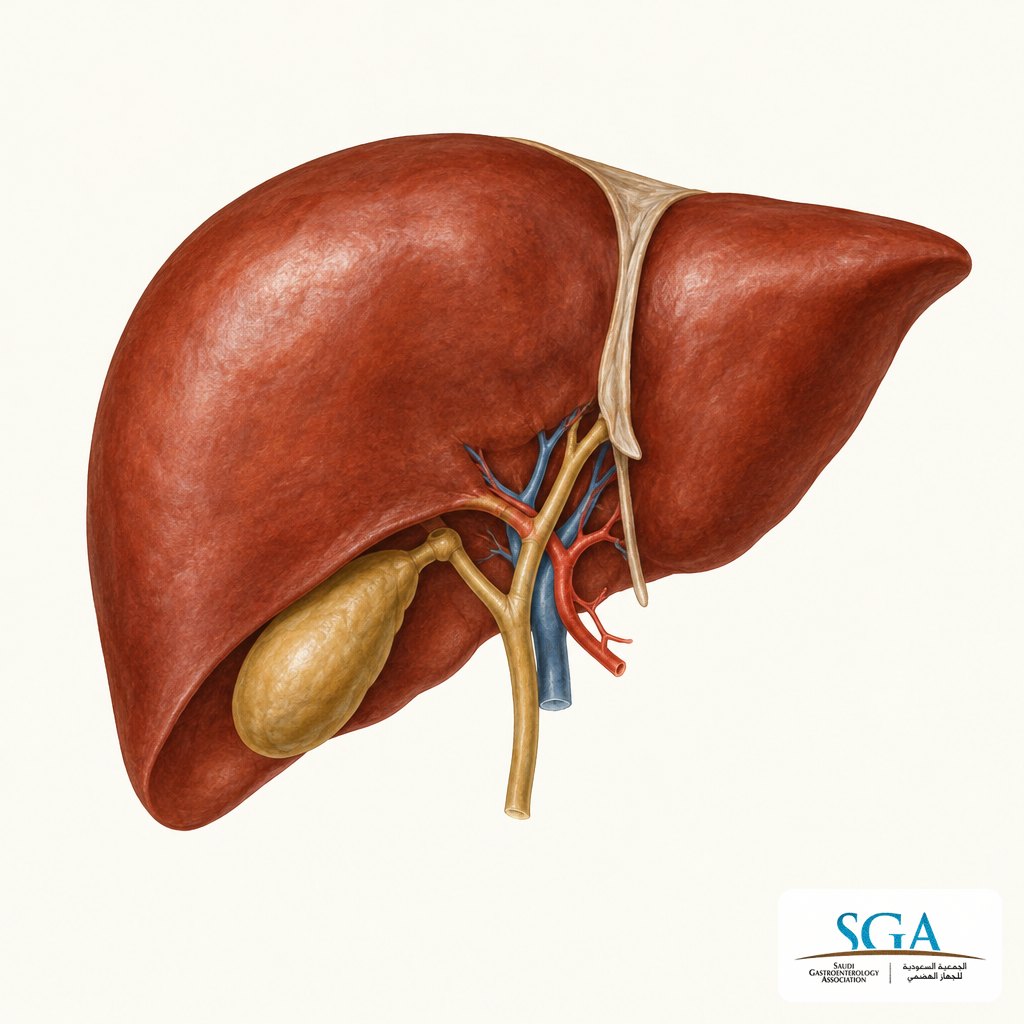
Bile is a digestive fluid made in the liver and carried by tubes called bile ducts to the intestine. In primary sclerosing cholangitis (PSC), the ducts inside and outside the liver become inflamed and scarred, forming narrowed areas (strictures). Bile then flows poorly, and over many years this can damage the liver and lead to cirrhosis (advanced scarring). "Primary" means that no outside cause is found.
How common is it?
PSC is uncommon. It is seen more in men, and often begins in adulthood. A large share of people with PSC also have inflammatory bowel disease, most often ulcerative colitis, so people with PSC are usually offered a colonoscopy.
Why does it happen?
The cause is not known. It is thought to involve the immune system and genetic factors, perhaps together with something in the gut environment. It is not caused by alcohol, diet or infection that you caught, and it is not contagious.
Symptoms
- Often none at the start; found through abnormal liver tests
- Tiredness
- Itching of the skin (pruritus)
- Pain or discomfort in the upper right abdomen
- Jaundice (yellow skin and eyes) and dark urine
- Fever and chills during bile duct infection
- Weight loss
Red flags — seek urgent medical care
Fever with chills, abdominal pain and jaundice
Possible bile duct infection (cholangitis), which can become life-threatening. Go to the emergency department now.
Vomiting blood or black stools
Possible bleeding from cirrhosis. Go to the emergency department.
Unexplained weight loss, worsening itching or jaundice, or new constant pain
Could mean a tight stricture or, uncommonly, bile duct cancer. See your specialist soon.
Confusion, drowsiness or abdominal swelling
May indicate advanced liver disease. Seek urgent care.
How is it diagnosed?
Blood tests often show raised "cholestatic" liver enzymes (such as ALP). The key test is MRCP, a special MRI of the bile ducts, which shows the beaded, narrowed pattern. Sometimes ERCP (a camera test through the mouth to look at the ducts) or a liver biopsy is needed. Doctors also check for inflammatory bowel disease and for other causes of bile duct disease, and assess scarring with FibroScan or blood scores.
Outlook — what to expect
PSC usually progresses slowly over many years, but it varies a great deal. No medicine has yet been proven to stop it. Cirrhosis may develop, and people with PSC have a higher risk of cancer of the bile ducts, gallbladder, liver and colon, so regular surveillance is important. Liver transplant is an effective option for advanced disease.
Treatment
Habits & Lifestyle
Regular care and a healthy lifestyle protect your liver and bones.
- Attend all scheduled blood tests, scans and colonoscopies
- Avoid alcohol and do not smoke
- Stay active and keep a healthy weight; weight-bearing exercise helps bone strength
- Get vaccinated against hepatitis A and B as advised
- Report fevers promptly, because duct infections need quick treatment
Diet
There is no special diet for PSC. Good nutrition keeps you strong.
- Eat a balanced diet with enough calcium and vitamin D for your bones
- Ask whether you need fat-soluble vitamins (A, D, E, K) if bile flow is poor
- Reduce salt if you have fluid build-up
- Avoid herbal remedies and supplements unless your doctor approves
Medications
There is no medicine proven to cure PSC. Medicines manage symptoms and related conditions. Your doctor decides.
- Ursodeoxycholic acid (UDCA) is used in some patients; its benefit is uncertain, so doctors decide case by case
- Itch can be treated with special medicines; do not use over-the-counter creams alone without advice
- Antibiotics are used promptly for bile duct infections
- Treat any inflammatory bowel disease as advised by your gastroenterologist
Procedures & Surgery
Procedures are used for narrowing, infection and surveillance.
- ERCP to stretch (dilate) or stent a tight stricture and take samples if cancer is suspected
- Colonoscopy at diagnosis and then at regular intervals
- Regular MRI or ultrasound to watch for bile duct, gallbladder and liver cancers
- Bone density scan
- Liver transplant for advanced disease or repeated cholangitis
Questions to ask your doctor
Save this list or print it before your appointment — doctors appreciate prepared patients.
- Do I also have inflammatory bowel disease, and how often should I have a colonoscopy?
- How much scarring do I have?
- What surveillance scans do I need?
- How can I manage the itching and tiredness?
- When should I be considered for transplant assessment?
Was this guide helpful?
Status: Approved for publication by SGA; individual clinician review is ongoing · Published 24/04/2026
For general education only; it does not replace your doctor’s advice. Individual clinician review of this guide is ongoing. SGA clinician? Review this guide