

saudigastro.com/patients/portal-hypertension
Category
Serious
Red flags
5
This article is educational and does not replace your doctor's advice. Seek urgent care for any red-flag symptoms.
What is it?
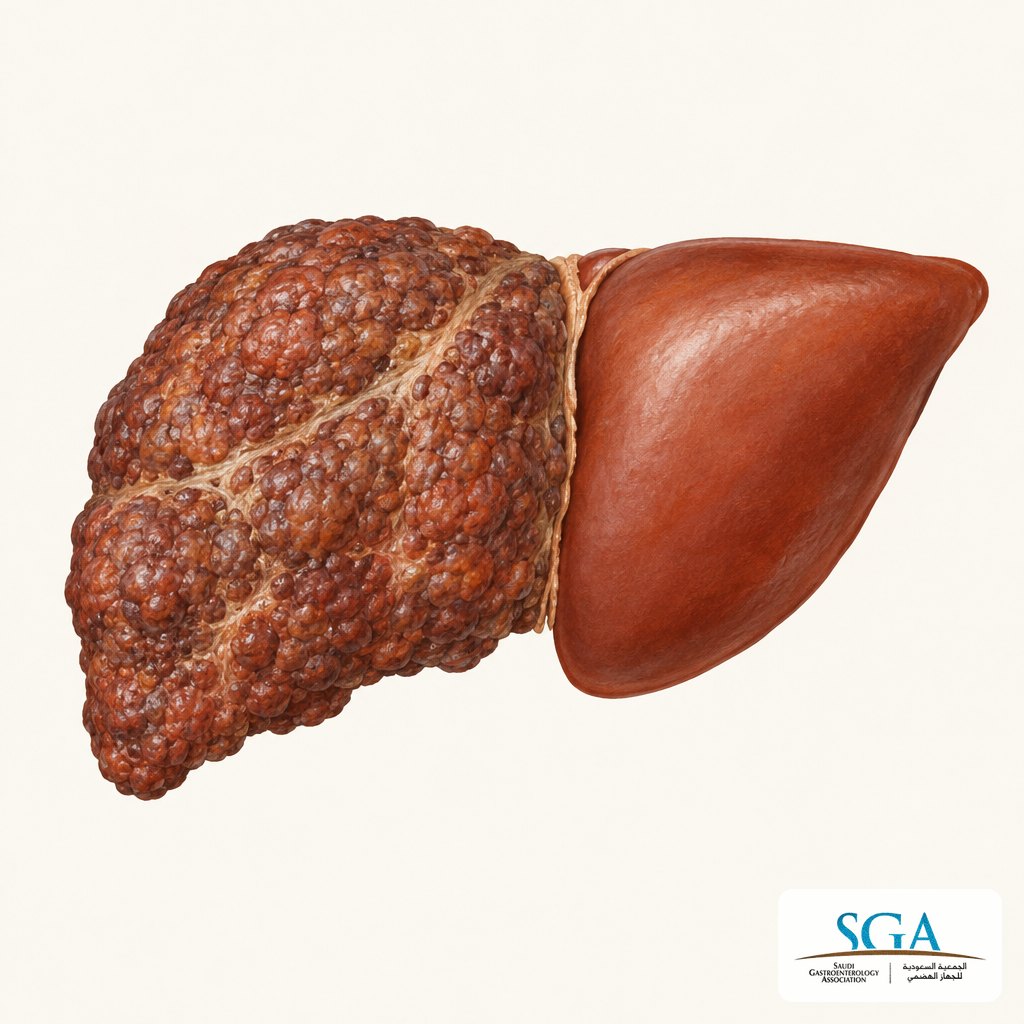
The portal vein carries blood from the intestines, stomach and spleen into the liver. When the liver is scarred, as in cirrhosis, blood has trouble passing through, and pressure builds up in the portal vein. This is portal hypertension. Blood then looks for other routes and forms swollen, fragile veins called varices, most often in the esophagus (food pipe) and stomach. Other effects include ascites (fluid in the abdomen) and an enlarged spleen.
How common is it?
It is a common consequence of cirrhosis of any cause. It can also occur, less often, with clots in the portal vein or with other liver and blood vessel conditions, sometimes even in people with a liver that is not scarred, and in children.
Why does it happen?
The most common cause is resistance to blood flow through a scarred liver (cirrhosis from hepatitis B or C, fatty liver, alcohol or other causes). It can also be caused by a clot in the portal vein before the liver or by diseases of the liver's small blood vessels. Blood flow into the portal system also increases in advanced liver disease, which adds to the pressure.
Symptoms
- Often no symptoms until a complication appears
- Swollen abdomen from ascites and weight gain
- Swollen legs and ankles
- Enlarged spleen, which may cause fullness on the left side and low blood counts leading to bruising or fatigue
- Confusion or sleep changes (hepatic encephalopathy)
- Visible veins on the abdominal wall
Red flags — seek urgent medical care
Vomiting blood (red or like coffee grounds)
Bleeding from varices is life-threatening. Call emergency services or go to the emergency department immediately.
Black, tarry or bloody stools
Possible bleeding in the gut. Go to the emergency department now.
Fever, abdominal pain or a rapidly swelling belly
Possible infection of ascitic fluid. Seek emergency care.
Confusion, drowsiness or reduced urine
Possible liver or kidney complication. Seek emergency care.
Dizziness, fainting or a racing heart
May mean blood loss. Seek urgent care.
How is it diagnosed?
Diagnosis is based on liver disease, imaging and endoscopy. Ultrasound, CT or MRI may show an enlarged spleen, ascites, collateral veins or a clot in the portal vein. Endoscopy (a camera through the mouth) looks directly for varices in the esophagus and stomach. FibroScan, spleen size and platelet counts help estimate the risk. Pressure in the liver veins can be measured in specialist centers when needed.
Outlook — what to expect
Portal hypertension is a sign of advanced liver disease, but its complications can often be prevented or treated. Screening for varices and treatment to prevent first bleeding reduce the risk considerably. Bleeding is serious and needs immediate hospital care. The long-term outlook depends on the underlying liver disease and on how well it can be treated.
Treatment
Habits & Lifestyle
If you vomit blood, do not try to treat it at home; call emergency services. For everyday care:
- Avoid alcohol completely
- Take your preventive medicines and attend endoscopy appointments
- Avoid anti-inflammatory painkillers (ibuprofen, diclofenac, aspirin) unless your doctor says it is safe, because they raise bleeding risk
- Weigh yourself regularly if you have ascites
- Treat the underlying liver disease as advised
Diet
Nutrition protects strength and helps control fluid.
- Follow the salt limit from your doctor to reduce fluid build-up
- Eat regular meals and enough protein; avoid long fasting gaps
- Avoid very hard, sharp or rough foods that could scratch the esophagus if you have varices, and chew well
- Avoid raw shellfish and unsafe food
Medications
Your doctor chooses medicines according to your risks.
- Beta-blockers or similar medicines are often used to lower pressure and the risk of bleeding from varices
- Water tablets (diuretics) and salt restriction for ascites
- Antibiotics to prevent or treat infection in selected situations
- Blood thinners may be used if a portal vein clot is found; this must be decided by a specialist
- Do not stop or change these medicines yourself
Procedures & Surgery
Endoscopic and radiology procedures prevent and treat bleeding.
- Endoscopy to screen for varices and to treat them with bands (band ligation)
- Emergency endoscopy, medicines and sometimes a stent or balloon for active bleeding
- TIPS: a radiology procedure creating a channel in the liver to lower portal pressure, for selected patients
- Paracentesis to drain troublesome ascites
- Liver transplant assessment for advanced cirrhosis
In the Saudi context
If you have cirrhosis and plan to fast during Ramadan or travel for Hajj or Umrah, speak to your liver team beforehand about your medicines, salt, fluids and the risk of bleeding or dehydration.
Questions to ask your doctor
Save this list or print it before your appointment — doctors appreciate prepared patients.
- Do I have varices, and how often do I need endoscopy?
- Should I take medicines to prevent bleeding?
- What should I do and where should I go if I vomit blood?
- Which medicines and painkillers should I avoid?
- Could I be a candidate for TIPS or transplant assessment?
Was this guide helpful?
Status: Approved for publication by SGA; individual clinician review is ongoing · Published 24/04/2026
For general education only; it does not replace your doctor’s advice. Individual clinician review of this guide is ongoing. SGA clinician? Review this guide