

saudigastro.com/patients/pancreatogenic-diabetes
Category
Chronic
Red flags
5
This article is educational and does not replace your doctor's advice. Seek urgent care for any red-flag symptoms.
What is it?
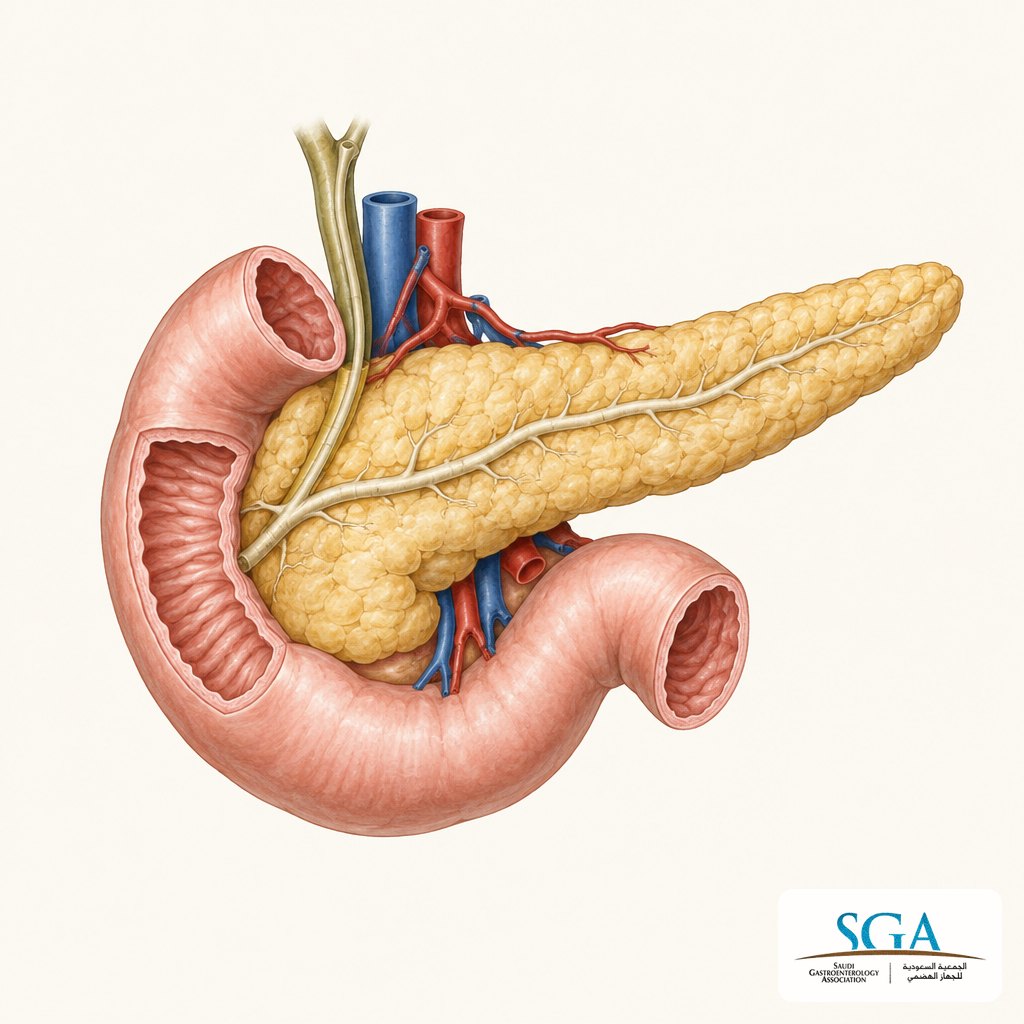
Type 3c diabetes (also called pancreatogenic diabetes) is diabetes that develops because the pancreas itself is diseased or has been removed in part. The pancreas makes insulin, which lowers blood sugar, and also glucagon, which raises it when sugar is too low, so when the pancreas is damaged both controls can be affected. This often makes blood sugar swing, with a higher risk of dangerously low readings (hypoglycaemia). The same damage often reduces digestive enzymes, so food is not absorbed well (exocrine pancreatic insufficiency), which also makes sugar control harder.
How common is it?
It is less common than type 1 and type 2 diabetes and is often not recognised, so many people are treated as having type 2 diabetes. It becomes more likely with time after chronic or repeated acute pancreatitis, and after pancreatic surgery, and also occurs with cystic fibrosis, haemochromatosis and pancreatic tumours.
Why does it happen?
Pancreatic damage destroys or scars the islet cells that make insulin and glucagon. Causes include chronic pancreatitis (often related to alcohol or genes), severe or repeated acute pancreatitis, surgical removal of part or all of the pancreas, cystic fibrosis, iron overload (haemochromatosis) and pancreatic tumours. New diabetes in an older adult with weight loss can occasionally be an early sign of a pancreatic tumour, so doctors consider this carefully.
Symptoms
- Increased thirst and frequent urination
- Tiredness and blurred vision
- Weight loss
- Greasy, pale, loose stools or bloating from poor digestion
- Episodes of shakiness, sweating, hunger, headache or confusion from low blood sugar
- Abdominal or back pain from the underlying pancreatic disease
Red flags — seek urgent medical care
Confusion, fainting, a seizure or inability to wake normally, especially if you use insulin
Severe low blood sugar. If the person can swallow safely, give sugar; if not or they do not recover, call emergency services immediately.
Extreme thirst, vomiting, abdominal pain, fast breathing, or fruity-smelling breath
Possible diabetic ketoacidosis, a medical emergency. Go to the emergency room now.
Severe constant upper abdominal pain with vomiting
Possible pancreatitis attack. Go to the emergency room.
Blood sugar readings that stay very high or very low despite treatment
Contact your diabetes team the same day.
Unexplained weight loss, yellow skin, or new diabetes after the age of 50 with abdominal pain
Needs prompt medical review to exclude a pancreatic tumour.
How is it diagnosed?
Diagnosis uses the usual diabetes tests (fasting blood sugar, HbA1c, or a glucose tolerance test) together with evidence of pancreatic disease: a history of pancreatitis or surgery, imaging showing a damaged pancreas, and tests showing poor digestive enzyme output such as a stool elastase test. Because HbA1c may under-read in some of these patients, doctors may use other measures of control. Tests for insulin or antibody levels may be done to tell it from type 1 and type 2 diabetes.
What the latest science says
Type 3c diabetes has historically been under-diagnosed, and treatment guidance is still developing. Current thinking is that insulin is often needed, that metformin may be used in some people with milder disease, and that treating enzyme deficiency together with the diabetes gives better results. Continuous glucose monitors are increasingly useful because of unstable readings. Research continues on better screening after pancreatitis.
Outlook — what to expect
With good care most people can keep their blood sugar in a safe range and live well. The main risks are low blood sugar episodes, long-term diabetes complications affecting the eyes, kidneys, nerves and heart, bone thinning, and malnutrition if digestion is poor. Regular checks, and treating the pancreas disease itself, improve the outlook.
Treatment
Habits & Lifestyle
Careful daily habits are the backbone of treatment, particularly because blood sugar can swing.
- Check your blood sugar as advised, and keep a record or use a glucose monitor if offered.
- Learn the signs of low blood sugar and always carry fast-acting sugar, especially if you take insulin.
- Avoid alcohol completely; it harms the pancreas and can cause severe low blood sugar.
- Do not smoke.
- Have regular eye, foot, kidney and bone checks, as advised for diabetes.
- Wear an ID card or bracelet saying you have diabetes.
Diet
Aim for regular meals with a steady amount of carbohydrate, enough protein and calories, and enzymes if needed. A dietitian who knows pancreatic disease can tailor your plan.
- Eat regular small meals and snacks rather than skipping meals, to prevent low blood sugar.
- Choose slowly absorbed carbohydrates (whole grains, legumes, vegetables) and limit sugary drinks and sweets, except to treat a low.
- Do not avoid fat or protein out of fear; with enzymes you need enough calories to keep your weight.
- Learn to count or estimate carbohydrates if you use mealtime insulin.
- Ask about vitamins A, D, E, K and calcium if digestion is poor.
Medications
Treatment is individual. Your doctor decides the medicines and doses and adjusts them; never change them yourself.
- Insulin is often needed, and doses are usually kept careful because of the risk of low sugar.
- Metformin may be used in some patients with milder disease, if appropriate for your kidney function and nutrition.
- Some newer diabetes medicines may not be suitable if you have had pancreatitis or are losing weight; your doctor will choose carefully.
- Pancreatic enzyme capsules with meals improve digestion and can help blood sugar control.
- Glucagon rescue kits may be prescribed for severe lows; family should learn how to use them.
Procedures & Surgery
Procedures treat the underlying pancreatic disease rather than the diabetes itself.
- Endoscopic or surgical treatment of duct blockages or pain in chronic pancreatitis is considered in selected patients.
- Pancreatic surgery may be needed for tumours or complications; diabetes care should be planned in advance.
- In some specialised centres, patients who need total pancreas removal for pain may be offered islet cell auto-transplantation.
- Bone density scanning is recommended to check bone health.
Living with the condition
- You need both a diabetes team and a pancreas or digestive specialist; make sure they communicate.
- Teach family and colleagues how to spot and treat a low blood sugar.
- Plan for illness days and travel, with extra supplies and your medicines in hand luggage.
- Tell your driving authority and employer if required for safety when you use insulin.
In the Saudi context
If you wish to fast in Ramadan, speak to your doctor well before the month starts. Fasting can be unsafe with insulin treatment or recurrent low sugar, and your medicines, enzyme timing and meals need an individual plan. Traditional sweets and dates should be limited and counted as carbohydrate.
Questions to ask your doctor
Save this list or print it before your appointment — doctors appreciate prepared patients.
- Do I have type 3c diabetes rather than type 2, and does this change my treatment?
- Do I need insulin, and how do I avoid low blood sugar?
- Should I also take pancreatic enzymes?
- Which tests do I need for my eyes, kidneys, bones and vitamins?
- Can I safely fast in Ramadan?
Was this guide helpful?
Status: Approved for publication by SGA; individual clinician review is ongoing · Published 24/04/2026
For general education only; it does not replace your doctor’s advice. Individual clinician review of this guide is ongoing. SGA clinician? Review this guide