

saudigastro.com/patients/pancreas-divisum
Category
Common
Red flags
5
This article is educational and does not replace your doctor's advice. Seek urgent care for any red-flag symptoms.
What is it?
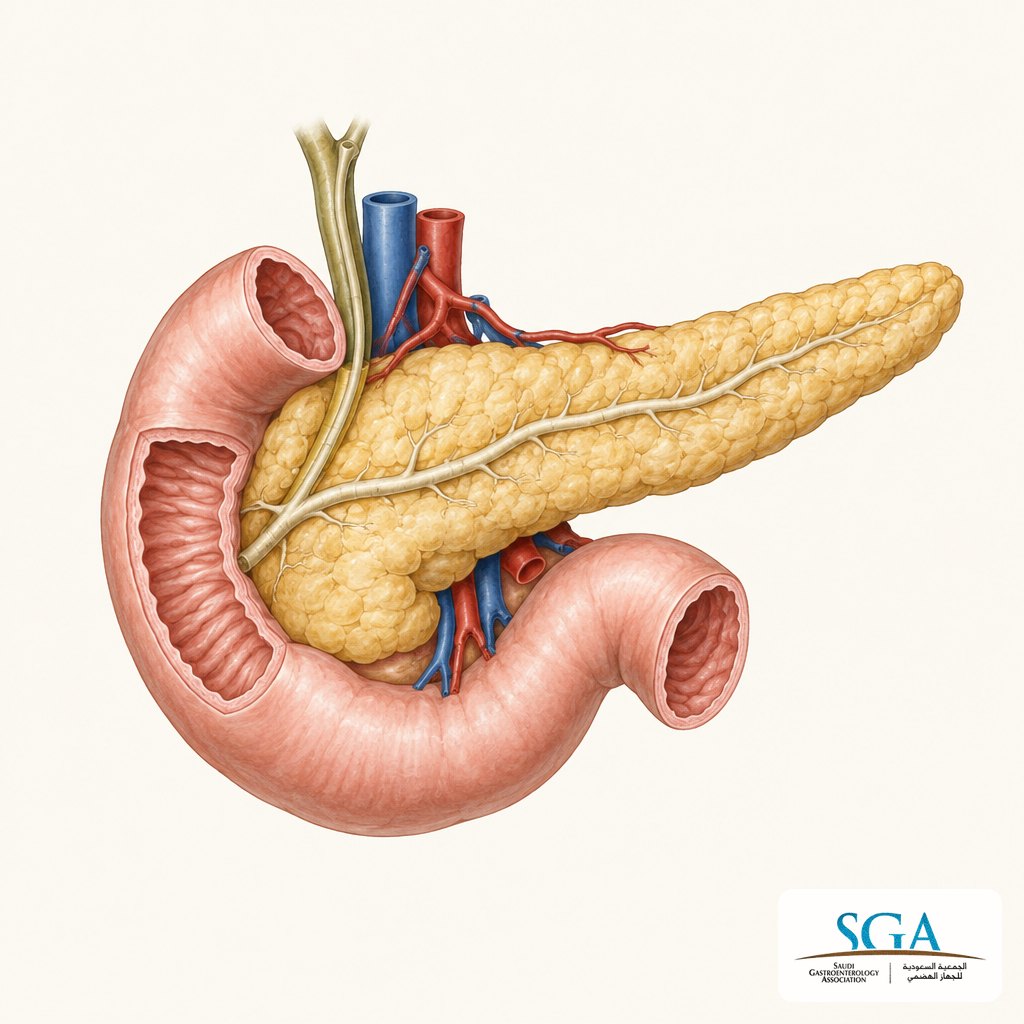
The pancreas normally drains its digestive juices into the small intestine through a main duct that joins the bile duct. During development in the womb two parts of the pancreas usually fuse into one drainage system. In pancreas divisum the two parts do not fuse fully, so most of the juice drains through a smaller opening (the minor papilla). This is a normal variant, not a disease, that a person is born with. Some experts think the smaller opening may sometimes struggle to handle the flow, which could lead to pancreatitis (inflammation of the pancreas) in a small number of people, particularly when other factors such as genes, alcohol or high blood fats are present.
How common is it?
It is one of the most common inborn variations of the pancreas, and the great majority of people who have it never develop symptoms and never know. It is often found by chance during scans done for another reason.
Why does it happen?
It happens because of how the pancreas formed before birth; nothing in a person's lifestyle causes it. If pancreatitis does occur, doctors first look for the common causes such as gallstones, alcohol, high triglycerides (a type of blood fat), medicines and genetic factors, before blaming the divisum. Pancreas divisum alone is not enough to explain pancreatitis in most people.
Symptoms
- Usually none at all
- Upper abdominal pain, sometimes after meals, that may go to the back
- Repeated attacks of pancreatitis with pain, nausea and vomiting
- Bloating or feeling unwell after fatty meals
- Rarely, signs of long-term pancreatic damage, such as greasy stools or weight loss
Red flags — seek urgent medical care
Sudden severe upper abdominal pain spreading to the back, with vomiting
Possible acute pancreatitis. Go to the emergency room now; do not wait.
Pain with fever, shaking chills or yellow eyes or skin
May suggest infection or a blocked bile duct. Seek urgent care the same day.
Pain that cannot be controlled, or inability to keep fluids down
Risk of dehydration and complications. Go to hospital.
A child with severe belly pain, repeated vomiting, or who is very unwell
A child needing urgent care must be seen immediately at an emergency department.
New weight loss or persistent pain after the age of 40
Needs investigation to look for other pancreatic or digestive conditions.
How is it diagnosed?
The usual test is an MRI of the bile ducts and pancreas (MRCP), sometimes with secretin to stimulate the pancreas, which shows the duct pattern without any instrument entering the body. Endoscopic ultrasound can give extra detail and look for other causes of pancreatitis. ERCP, an endoscopic X-ray test of the ducts, is no longer used just to diagnose, because it carries a risk of pancreatitis, and is kept for treatment. Blood tests look for other causes such as gallstones, alcohol effects and high blood fats.
What the latest science says
Experts now agree that pancreas divisum is mostly a harmless variant and that the diagnosis alone should not lead to treatment. Endoscopic therapy may help a selected group of people who have repeated unexplained attacks of pancreatitis, while its value for pain without pancreatitis is less clear. Genetic factors seem to play a role in those who do get pancreatitis.
Outlook — what to expect
For most people the outlook is excellent and no treatment is needed. For those with repeated pancreatitis, endoscopic treatment can reduce attacks in some, but not all. Avoiding alcohol and smoking and treating other causes lowers the risk of further attacks.
Treatment
Habits & Lifestyle
If you have divisum without symptoms, no changes are needed. If you have had pancreatitis, these steps lower the risk of further attacks.
- Avoid alcohol completely if you have had pancreatitis.
- Do not smoke; smoking increases the risk of pancreatitis.
- Keep a healthy weight and exercise regularly.
- Do not take supplements or medicines that may inflame the pancreas without asking your doctor.
- Know the warning signs of an attack so you can get help early.
Diet
There is no specific diet for pancreas divisum. If you have had pancreatitis, a healthy diet lowers the chance of recurrence.
- Choose a balanced diet with plenty of vegetables, fruit and whole grains.
- Limit very fatty and fried meals, which may trigger pain in some people.
- Eat smaller, more frequent meals if large meals bring on pain.
- If your blood triglycerides are high, follow the diet advice to bring them down.
Medications
There is no medicine that corrects pancreas divisum. Medicines are used for pain or to treat other causes of pancreatitis, as decided by your doctor.
- Simple pain relief is chosen by your doctor, who will avoid medicines that could harm you.
- Pancreatic enzyme capsules may be used if there is pancreatic damage with poor digestion.
- Medicines for high blood fats or other conditions help to reduce attacks.
- Never start herbal products or supplements without checking first.
Procedures & Surgery
Procedures are only considered in a small group with repeated attacks of pancreatitis where no other cause is found. This should be discussed in a specialist centre.
- Endoscopic treatment (ERCP) can widen the minor opening, sometimes with a temporary stent, to improve drainage.
- ERCP has its own risks, including pancreatitis, bleeding and infection; the benefits and risks should be discussed in detail.
- Surgery on the minor opening is rarely used when endoscopic treatment is not possible or fails.
Living with the condition
- If you have no symptoms, you can live completely normally.
- Keep a record of any attacks, what you ate and drank, and tests, to share with your team.
- If a child has divisum, it is usually harmless; see a doctor if they have repeated pain or vomiting.
Questions to ask your doctor
Save this list or print it before your appointment — doctors appreciate prepared patients.
- Is my pancreas divisum likely to be the cause of my symptoms?
- Have other causes of pancreatitis been checked?
- Would an endoscopic procedure help me, and what are the risks?
- Do I need genetic testing or follow-up?
- What should I do if I get an attack of pain?
Was this guide helpful?
Status: Approved for publication by SGA; individual clinician review is ongoing · Published 24/04/2026
For general education only; it does not replace your doctor’s advice. Individual clinician review of this guide is ongoing. SGA clinician? Review this guide