

saudigastro.com/patients/gi-neuroendocrine-tumors
Category
Serious
Red flags
4
This article is educational and does not replace your doctor's advice. Seek urgent care for any red-flag symptoms.
What is it?
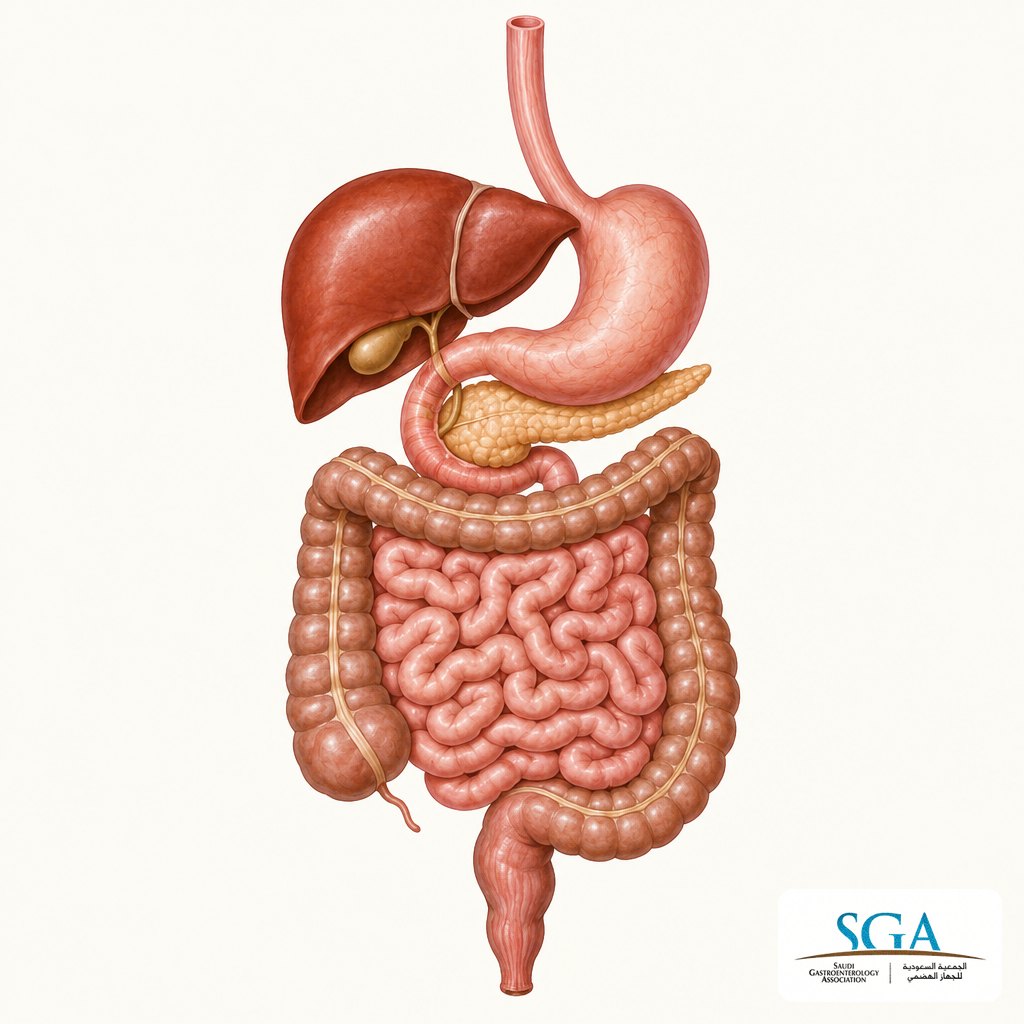
The lining of the digestive tract contains special cells that make hormones and respond to nerve signals. A neuroendocrine tumour (NET) is a growth that starts from these cells. NETs can arise in the stomach, small bowel, appendix, colon, rectum and pancreas. They range from small, slow-growing tumours that may never cause trouble to more aggressive ones. Doctors describe them by their "grade", which reflects how fast the cells are dividing, and by their "stage", which describes how far they have spread. Some NETs release hormones into the blood and cause particular symptoms, a pattern called carcinoid syndrome.
How common is it?
These tumours are uncommon compared with the usual digestive cancers, although they are being found more often as endoscopy and scans are used more widely. Many are discovered by chance during a test done for another reason.
Why does it happen?
In most people the cause is unknown. A small number are linked to inherited conditions such as multiple endocrine neoplasia type 1 (MEN1). Long-standing stomach inflammation with low acid (atrophic gastritis) can lead to a type of stomach NET. Having a risk factor does not mean you will develop one.
Symptoms
- Often no symptoms, especially for small tumours found by chance
- Belly pain or discomfort that does not go away
- Rectal bleeding or a change in bowel habit (for rectal tumours)
- Bowel blockage symptoms: cramping, bloating, vomiting (for small bowel tumours)
- Flushing of the face and neck, watery diarrhoea or wheezing from hormone release (carcinoid syndrome)
- Tiredness, weight loss or reduced appetite
Red flags — seek urgent medical care
Severe belly pain with repeated vomiting and a swollen belly
May mean the bowel is blocked. Go to the emergency department now.
Vomiting blood, black stools or heavy rectal bleeding
Signals significant bleeding. Seek emergency care immediately.
Sudden severe flushing with breathing difficulty, a racing heart or a fall in blood pressure (dizziness, fainting)
Can be a severe hormone release episode. Call emergency services.
Persistent diarrhoea, weight loss or new yellowing of the skin
Needs prompt assessment, as it may point to spread or a hormone-producing tumour. See your doctor soon; if yellowing comes with fever or severe pain, go to the emergency department.
How is it diagnosed?
Diagnosis needs a tissue sample (biopsy) examined under a microscope, which also gives the grade. Many tumours are first seen at endoscopy or colonoscopy. Scans such as CT, MRI and specialised nuclear scans that pick up neuroendocrine cells are used to see how far the tumour has spread. Blood or urine tests for hormones or their breakdown products may be used for some patients. Endoscopic ultrasound can help assess depth. Care is best planned by a team with experience in neuroendocrine tumours, and your doctor decides which tests you need.
What the latest science says
Treatment has expanded in recent years and now includes surgery, endoscopic removal of small tumours, medicines that slow tumour growth and hormone symptoms, and targeted radiation treatments that use a radioactive compound attached to a molecule which seeks out tumour cells. Which approach is used depends on the site, grade and stage, and is decided by a multidisciplinary team.
Outlook — what to expect
The outlook varies widely. Small, low-grade tumours that are completely removed often have an excellent outlook, while higher-grade or spread tumours need more intensive treatment. Even when a tumour cannot be cured, many people live for a long time with good control of symptoms. Regular follow-up is usually needed. Your team can give you an individual picture.
Treatment
Habits & Lifestyle
Healthy routines help you cope with treatment and follow-up.
- Keep all follow-up appointments and scans
- Keep a diary of flushing, diarrhoea or pain, and note what seems to trigger them
- Stay as active as you can, and do not smoke
- Ask about seeing a specialist neuroendocrine team if you have not already
Diet
Diet does not treat the tumour, but can ease symptoms and prevent nutrient deficiencies.
- Eat small, regular meals if appetite is poor or diarrhoea is a problem
- Notice whether alcohol, large meals or spicy or fatty foods bring on flushing or diarrhoea, and limit those
- Drink enough fluids, especially with diarrhoea
- Ask for a dietitian review; some treatments affect fat absorption and vitamin levels
Medications
Medicines are chosen by the specialist team for your tumour type and symptoms.
- Somatostatin analogue injections can control hormone symptoms and slow growth in some tumours
- Targeted tablets or other anti-tumour medicines are used for some patients with advanced disease
- Chemotherapy is used mainly for higher-grade tumours
- Anti-diarrhoea medicines may help; ask your doctor before taking them regularly
- Never stop or change treatment without speaking to your team
Procedures & Surgery
Procedures aim to remove the tumour when possible and to treat spread.
- Small stomach or rectal tumours may be removed through the scope
- Surgery to remove the tumour and nearby lymph nodes is the main treatment for many localised tumours
- Treatments directed at the liver (surgery, blocking its blood supply, or heat treatment) may be used if the tumour has spread there
- Peptide receptor radionuclide therapy is a targeted radiation treatment for selected patients
Living with the condition
- A diagnosis of any tumour is frightening. Ask for a clear explanation of your tumour's grade and stage and what the plan is.
- Support from family, counsellors or patient groups can help.
Questions to ask your doctor
Save this list or print it before your appointment — doctors appreciate prepared patients.
- What type, grade and stage is my tumour?
- Can it be removed completely, and is surgery needed?
- Does my tumour make hormones, and do I need tests or treatment for that?
- Could this be inherited, and should my family be checked?
- How often will I need follow-up scans and tests?
- Will my case be reviewed by a multidisciplinary team?
Was this guide helpful?
Status: Approved for publication by SGA; individual clinician review is ongoing · Published 24/04/2026
For general education only; it does not replace your doctor’s advice. Individual clinician review of this guide is ongoing. SGA clinician? Review this guide