

saudigastro.com/patients/gi-bleeding-when-to-go-er
Category
Serious
Red flags
6
This article is educational and does not replace your doctor's advice. Seek urgent care for any red-flag symptoms.
What is it?
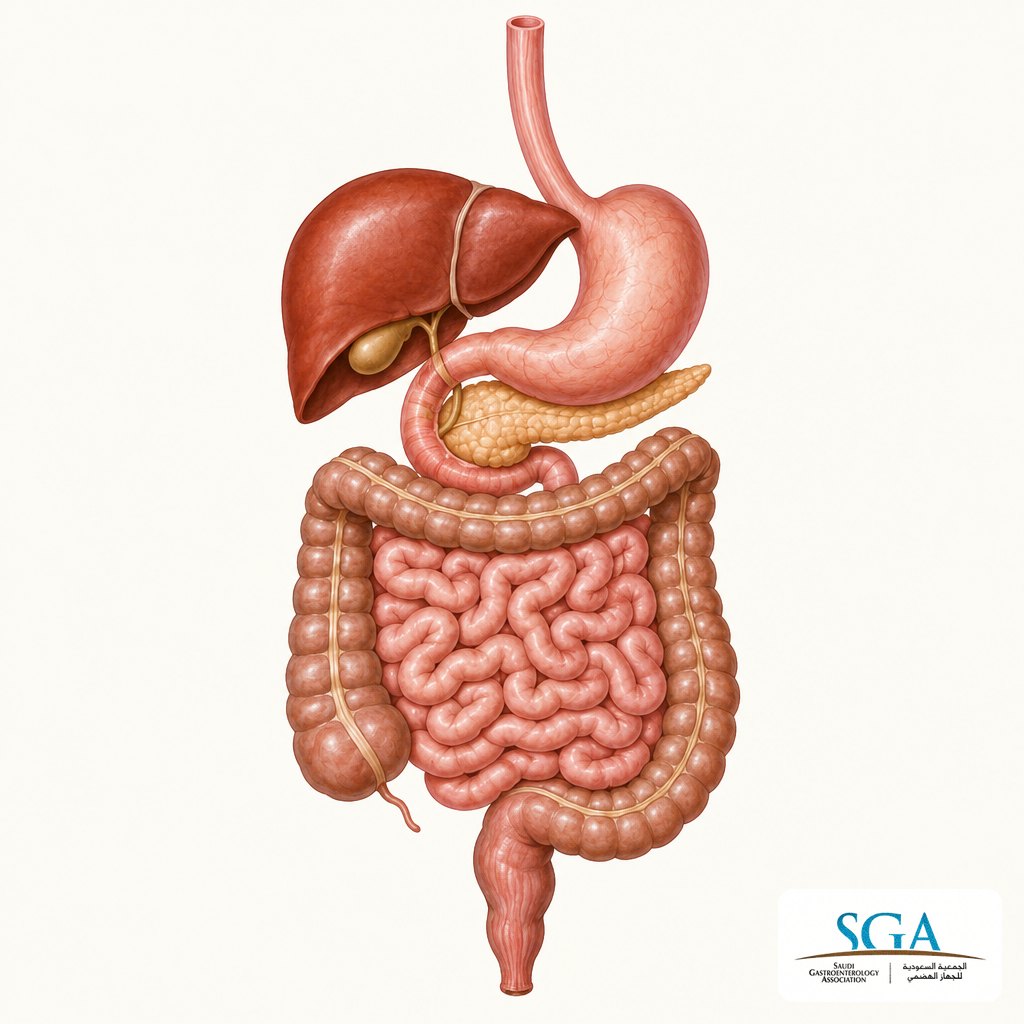
GI (gastrointestinal) bleeding is bleeding anywhere from the esophagus (food pipe) to the anus. Upper GI bleeding comes from the esophagus, stomach or first part of the small bowel, and may appear as vomiting blood or black, tarry stool (melena). Lower GI bleeding comes from the colon, rectum or anus and usually shows as red or maroon blood in the stool. Some bleeding is hidden and found only by tests or through anemia (low blood count).
How common is it?
GI bleeding is a common reason for emergency visits and hospital admission. Many bleeds stop by themselves, but some are life-threatening, and it is not possible to tell at home which is which.
Why does it happen?
Common causes of upper bleeding include stomach or duodenal ulcers (often linked to H. pylori infection or anti-inflammatory painkillers such as ibuprofen and aspirin), inflamed stomach lining, and enlarged veins in the esophagus or stomach (varices) in people with liver disease. Lower bleeding can come from diverticula (small pouches in the colon wall), hemorrhoids, polyps, colitis, or colon cancer. Blood thinners increase the risk and severity.
Symptoms
- Vomiting red blood or material that looks like coffee grounds
- Black, sticky, foul-smelling stool
- Red or maroon blood passed from the back passage
- Dizziness, lightheadedness or fainting when standing
- Pale skin, fast heartbeat, shortness of breath
- Abdominal pain, though bleeding can be painless
Red flags — seek urgent medical care
Vomiting blood or coffee-ground material
Possible serious upper bleeding. Call emergency services or go to the ER now. Do not drive yourself.
Black tarry stool, or a large amount of red blood from the back passage
Significant bleeding. Go to the ER now.
Fainting, dizziness on standing, cold clammy skin, rapid heartbeat or confusion
Signs of heavy blood loss and shock. Call emergency services immediately.
Any bleeding while taking blood thinners (such as warfarin, apixaban, rivaroxaban, clopidogrel or aspirin)
Can become serious quickly. Go to the ER, but do not stop the medicine on your own unless instructed by a doctor.
Known liver disease or varices with any bleeding
Variceal bleeding is very dangerous. Go to the ER immediately.
Any blood in the stool or vomit in a baby or child
A baby or child with bleeding must be seen immediately at an emergency department.
How is it diagnosed?
In the emergency department the team checks your pulse and blood pressure first, starts fluids through a drip, and takes blood tests (including blood count and blood group). Endoscopy, a thin flexible camera passed through the mouth (gastroscopy) or back passage (colonoscopy), finds the source of bleeding and often treats it at the same time. A CT scan of the blood vessels may be used if the source is not found.
Outlook — what to expect
Most people recover well when they reach hospital in time and the cause is treated. Delay can be dangerous. After a bleed, your team will treat the cause and plan follow-up to lower the chance of it happening again.
Treatment
Habits & Lifestyle
Do not try to treat bleeding at home. Get emergency help first.
- Call emergency services or go to the nearest ER now if you have red-flag signs; do not drive yourself.
- Lie down and stay still while waiting; if you are vomiting, lie on your side.
- Take a list of your medicines, especially blood thinners and painkillers, to the hospital.
- Do not eat or drink anything before being seen, in case you need an urgent endoscopy.
- Quit smoking and limit alcohol after recovery.
Diet
Do not eat or drink if you are bleeding or if an emergency endoscopy may be needed.
- In hospital you will probably be kept nil by mouth until the doctors decide it is safe.
- Once recovered, eat regular meals and include iron-rich foods if you are anemic.
- Avoid alcohol and very spicy foods if you have a stomach ulcer, as advised by your doctor.
Medications
Medicines are given in hospital and adjusted afterwards.
- Intravenous acid-lowering medicine for suspected upper bleeding, and other specific medicines if varices are suspected.
- Blood transfusion may be needed if blood loss is large.
- Your team will decide whether to pause blood thinners or aspirin; never stop them yourself without advice.
- Treatment for H. pylori if found, and avoiding anti-inflammatory painkillers where possible.
- Iron treatment for anemia after bleeding.
Procedures & Surgery
Endoscopy is the main way to find and stop bleeding.
- Endoscopy can stop bleeding using clips, heat, injection or bands (for varices).
- If endoscopy cannot control the bleeding, a radiologist can block the bleeding vessel (embolization).
- Surgery is rarely needed for bleeding that cannot be controlled otherwise.
- A follow-up endoscopy or colonoscopy may be planned to find the cause.
In the Saudi context
If bleeding starts during Ramadan fasting, Hajj or Umrah, do not delay going to the ER to continue fasting or the rituals; emergency treatment takes priority and religious scholars allow breaking a fast for medical need.
Questions to ask your doctor
Save this list or print it before your appointment — doctors appreciate prepared patients.
- What caused my bleeding, and could it happen again?
- Do I need to change or pause any of my medicines, including aspirin or blood thinners?
- Do I need a repeat endoscopy or colonoscopy?
- Do I have anemia, and how should it be treated?
- Which symptoms should send me straight back to the ER?
Was this guide helpful?
Status: Approved for publication by SGA; individual clinician review is ongoing · Published 24/04/2026
For general education only; it does not replace your doctor’s advice. Individual clinician review of this guide is ongoing. SGA clinician? Review this guide