

saudigastro.com/patients/gastritis
Category
Common
Red flags
6
This article is educational and does not replace your doctor's advice. Seek urgent care for any red-flag symptoms.
What is it?
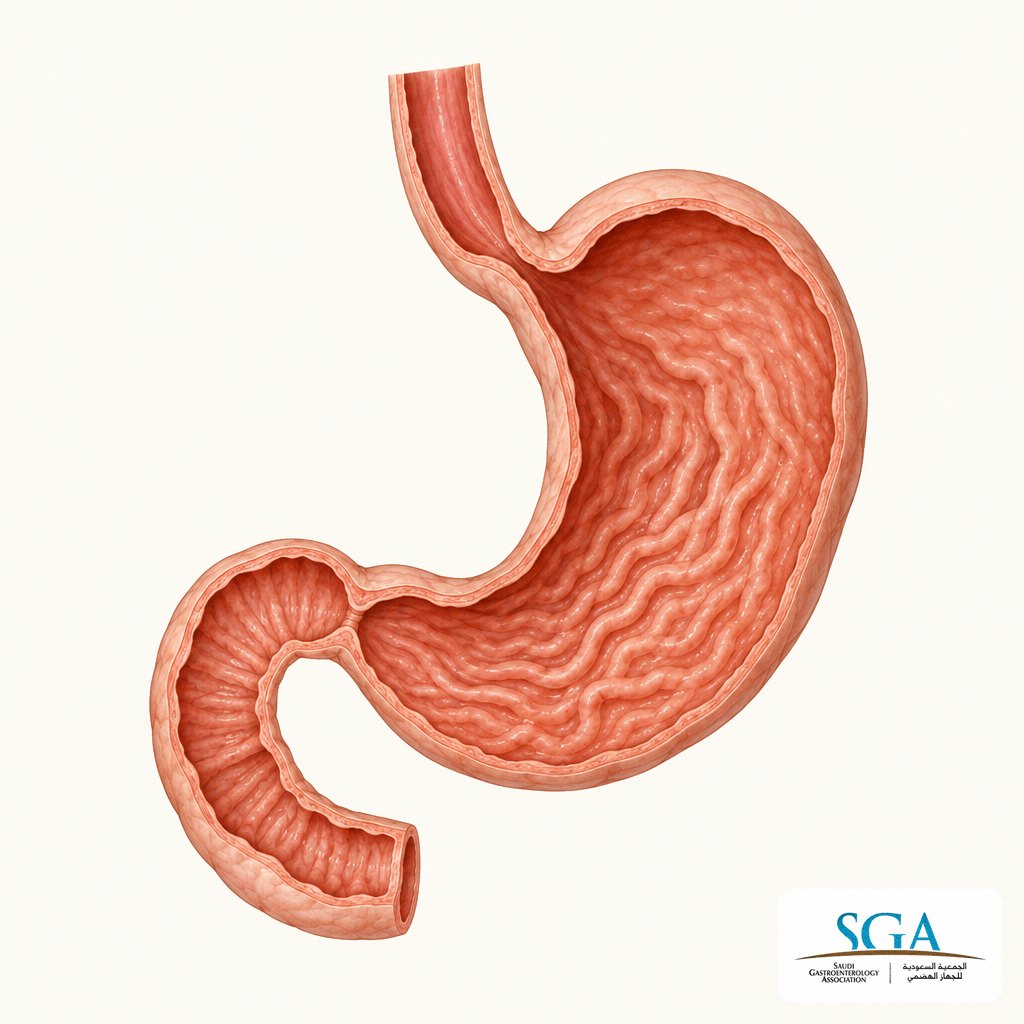
Gastritis means inflammation of the lining of the stomach. It can come on suddenly (acute) or develop slowly over time (chronic). Some people have no symptoms at all. When there are symptoms they usually include upper stomach discomfort, burning, nausea or feeling full early. Gastritis is a description of what the stomach lining looks like under the microscope or camera; it does not always explain the symptoms. When the damage goes deeper and makes a sore, it is called an ulcer (see Peptic Ulcer Disease).
How common is it?
Gastritis is very common worldwide, and chronic gastritis from H. pylori infection is among the most frequent findings at endoscopy. Many people have it without knowing. The exact proportion in Saudi Arabia varies between regions and age groups, but H. pylori infection acquired in childhood is common in our region.
Why does it happen?
The stomach has a protective mucus layer and makes strong acid. Gastritis happens when this protection is damaged. Main causes: (1) H. pylori infection (see H. pylori Infection); (2) NSAID pain-relief medicines such as ibuprofen and diclofenac, and aspirin; (3) alcohol, especially heavy use; (4) autoimmune gastritis, where the immune system attacks stomach cells and can lead to low vitamin B12 and iron deficiency; (5) bile reflux, where bile flows back from the intestine into the stomach (more common after stomach surgery or gallbladder removal); (6) severe illness or stress on the body, such as major surgery or intensive care; (7) less often, other infections, radiation, or chemotherapy.
Symptoms
- Burning or gnawing discomfort in the upper abdomen
- Nausea, sometimes vomiting
- Feeling full quickly or bloated after small meals
- Loss of appetite
- Belching and hiccups
- Often no symptoms at all
- With autoimmune gastritis: tiredness, pale skin, tingling in the hands or feet from low B12 or iron
Red flags — seek urgent medical care
Black, tarry stools or vomiting blood (or material like coffee grounds)
Bleeding from the stomach. This is an emergency. Go to the emergency department.
Unexplained weight loss
Needs endoscopy and further tests to exclude a serious cause.
Difficulty or pain when swallowing
Needs prompt assessment, usually with endoscopy.
Persistent vomiting or being unable to eat
May suggest narrowing or blockage of the stomach outlet or other serious problems.
New upper-stomach symptoms starting after about age 55, anaemia, or a family history of stomach cancer
Needs an endoscopy rather than just treating for gastritis.
Severe or sudden stomach pain
Could be a perforated ulcer or other emergency. Seek urgent care.
How is it diagnosed?
The doctor asks about your symptoms, medicines (especially pain-relief tablets and aspirin), alcohol and family history. Mild symptoms in a younger person without red flags are often managed by testing for H. pylori (breath test, stool antigen test or blood test as appropriate) and treating it if present. Note: PPIs and antibiotics can make breath and stool tests falsely negative, so tell your doctor what you have taken. An upper endoscopy (gastroscopy), where a thin camera is passed through the mouth into the stomach, is advised for red flags, older age, or when symptoms do not settle. Biopsies (small tissue samples) from the stomach confirm gastritis, check for H. pylori, and look for autoimmune changes or pre-cancerous changes. Blood tests may check for anaemia, iron and vitamin B12.
What the latest science says
Long-standing H. pylori gastritis, and autoimmune gastritis, can lead to thinning of the stomach lining (atrophy) and changes called intestinal metaplasia. These raise stomach cancer risk slightly over many years, so treating H. pylori and following the advice of your gastroenterologist about surveillance when needed is important. The vast majority of people with gastritis never develop cancer.
Outlook — what to expect
Very good. Acute gastritis from alcohol or medicines usually settles in days once the trigger is stopped. H. pylori gastritis is cured in most people with a course of treatment chosen by the doctor, and symptoms and inflammation then improve. Autoimmune gastritis is long-term but manageable with vitamin B12 and iron replacement and periodic follow-up.
Treatment
Habits & Lifestyle
Removing what irritates the stomach is the foundation of treatment.
- Avoid NSAID painkillers (ibuprofen, diclofenac, naproxen) and do not take aspirin unless a doctor has prescribed it. Ask about safer options, such as paracetamol for pain.
- If you must take aspirin for the heart or blood vessels, do not stop it on your own. Talk to your doctor about stomach protection.
- Stop smoking and avoid alcohol while the stomach heals.
- Do not use herbal or traditional remedies of unknown content; some can irritate the stomach or harm the liver.
- Manage stress and sleep well; stress can make symptoms feel worse even if it is not the root cause.
Diet
No special diet cures gastritis, but some foods and habits can aggravate symptoms.
- Eat smaller, regular meals instead of large ones, and avoid lying down for 2 to 3 hours after eating.
- Notice which foods trigger your symptoms (for example very spicy, fried or fatty food, strong coffee, soft drinks) and limit them. You do not need to avoid foods that do not bother you.
- In Ramadan, break your fast gently with water and dates, then a light meal, before the main meal, and avoid heavy fried food at iftar and suhoor.
- A balanced diet rich in fruit, vegetables and whole grains is good for general health. If you have autoimmune gastritis, follow your doctor’s advice about vitamin B12 and iron.
Medications
Treatment depends on the cause. Your doctor decides which medicines and for how long.
- Acid-lowering medicines, mostly proton pump inhibitors (PPIs, see Proton Pump Inhibitors), reduce stomach acid and let the lining heal. They are usually used for a limited course, and should not be continued indefinitely without a reason.
- If H. pylori is found, a combination of acid-lowering medicine and antibiotics chosen by your doctor is used (see H. pylori Infection). Finish the whole course and then have a test to confirm the germ has gone, as advised.
- Antacids can give quick short-term relief of burning but do not treat the cause.
- Autoimmune gastritis: vitamin B12 (often by injection) and iron replacement if levels are low, as directed by your doctor.
- Bile reflux gastritis is harder to treat; your doctor may suggest specific medicines or, rarely, surgery.
Procedures & Surgery
Most people with gastritis never need a procedure. Endoscopy is used to look and to take biopsies.
- Upper endoscopy (gastroscopy) with biopsies for red flags, older age, or when symptoms persist.
- Repeat endoscopy for follow-up only if advised, for example in cases of atrophy or intestinal metaplasia, or to check healing of an ulcer.
- Endoscopic treatment of bleeding if gastritis or an ulcer causes bleeding.
Living with the condition
- Take medicines exactly as prescribed and finish courses of H. pylori treatment.
- Check with your doctor or pharmacist before starting any new painkiller, including over-the-counter or imported products.
- Keep follow-up appointments if you have atrophic or autoimmune gastritis.
- Family members of someone with H. pylori may also wish to ask their doctor about testing.
In the Saudi context
Over-the-counter pain-relief tablets are widely available, and many people take them regularly for headaches, joint or period pain without advice. During Ramadan, long gaps without food, heavy fried iftar dishes and late-night meals can aggravate symptoms. If you notice black stools or vomiting blood, do not wait; go to the emergency department.
Questions to ask your doctor
Save this list or print it before your appointment — doctors appreciate prepared patients.
- What is causing my gastritis, and do I need an H. pylori test?
- Do I need an endoscopy?
- Which painkillers are safe for me?
- How long should I take a proton pump inhibitor, and can I stop it later?
- Should my vitamin B12 and iron be checked?
Trusted resources
Was this guide helpful?
Status: Approved for publication by SGA; individual clinician review is ongoing · Published 24/04/2026
For general education only; it does not replace your doctor’s advice. Individual clinician review of this guide is ongoing. SGA clinician? Review this guide