

saudigastro.com/patients/exocrine-pancreatic-insufficiency
Category
Chronic
Red flags
5
This article is educational and does not replace your doctor's advice. Seek urgent care for any red-flag symptoms.
What is it?
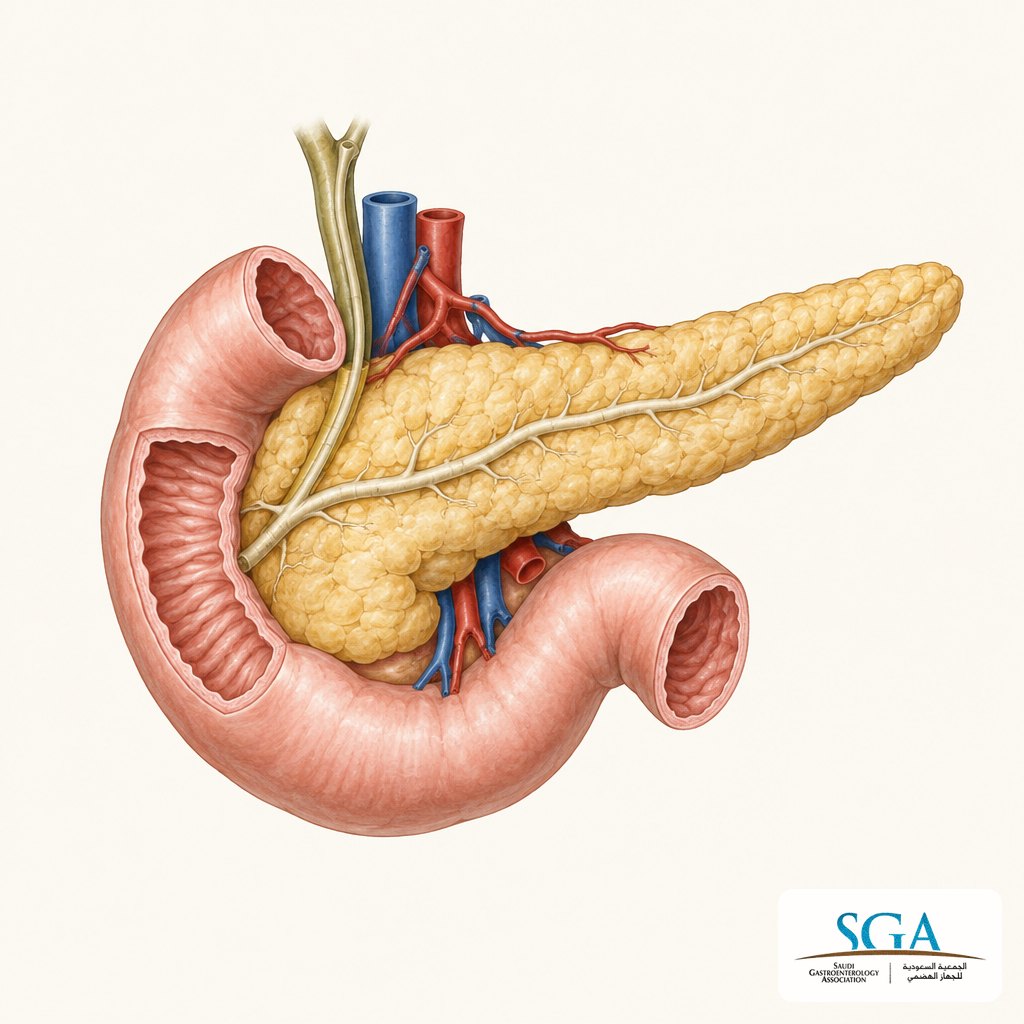
The pancreas is a gland behind the stomach. Besides making insulin, it makes digestive enzymes (lipase for fat, protease for protein, amylase for starch) that flow into the small intestine to break down food. In exocrine pancreatic insufficiency (EPI), the pancreas makes or delivers too little of these enzymes. Fat is affected first and most, so stools become greasy and pale and the body loses calories and fat-soluble vitamins (A, D, E and K). The condition is treatable, and the main treatment is replacing the missing enzymes.
How common is it?
EPI is common in people with long-standing pancreatitis, cystic fibrosis, after pancreatic or stomach surgery, and in some with pancreatic cancer. It can also occur in people with diabetes or coeliac disease and in older age, and is often under-recognised because the symptoms resemble other digestive problems. Anyone with chronic loose or greasy stools and weight loss should be considered for assessment.
Why does it happen?
The pancreas can be damaged (chronic pancreatitis from alcohol, genes or other causes, repeated acute pancreatitis, cystic fibrosis, tumours), removed or bypassed by surgery, or the enzymes may not mix well with food (after some stomach operations) or may be blocked from reaching the gut (a blocked pancreatic duct). In coeliac disease and some other bowel diseases, enzyme release can drop temporarily because of changes in gut hormones. Smoking and alcohol increase the risk of pancreatic damage.
Symptoms
- Pale, greasy, bulky, foul-smelling stools that float or are hard to flush (steatorrhoea)
- Frequent loose stools
- Bloating, gas and cramping after meals
- Weight loss despite a good appetite
- Fatigue and weakness
- Signs of vitamin deficiency: night-vision problems, bone pain, easy bruising or bleeding
Red flags — seek urgent medical care
Severe, constant upper abdominal pain radiating to the back, with vomiting
Possible acute pancreatitis. Go to the emergency room now.
Rapid or marked weight loss, or loss of appetite with yellow eyes or skin
May indicate a serious pancreatic or bile duct problem. Seek urgent medical review.
Black stools or vomiting blood
Bleeding in the digestive tract. Go to the emergency room.
Extreme thirst, passing lots of urine, confusion or drowsiness (in a person with diabetes or at risk)
Possible dangerously high blood sugar. Seek emergency care.
Bone pain or fractures after minor injuries, or unusual bleeding
May be vitamin D or K deficiency. See your doctor soon.
How is it diagnosed?
Diagnosis combines symptoms, risk factors and tests. A stool test for pancreatic elastase is the commonly used screening test; low levels suggest EPI, although watery stools can give a false low result. Other tests include blood tests for vitamins and nutrition, imaging of the pancreas (ultrasound, CT, MRI or endoscopic ultrasound) to look for the cause, and in some centres breath tests. In people with a clear cause such as chronic pancreatitis or pancreatic surgery, doctors often start treatment based on symptoms.
What the latest science says
Modern enzyme capsules are designed to release their contents in the small intestine. Research shows that many patients are under-dosed or take the capsules at the wrong time, so adjusting how and when they are taken often improves results. Experts also stress checking and replacing fat-soluble vitamins, assessing bone health, and treating EPI early to prevent malnutrition.
Outlook — what to expect
EPI is usually a long-term condition, but with correct enzyme treatment and nutrition most people have fewer symptoms, regain or keep their weight, and live normally. The outlook mainly depends on the underlying disease. Regular review is needed to adjust the enzyme dose and check vitamins and bone health.
Treatment
Habits & Lifestyle
Habits that protect the pancreas and support treatment.
- Take the enzyme capsules with every meal and snack that contains fat, exactly as your doctor instructed.
- Do not drink alcohol and do not smoke; both damage the pancreas.
- Keep a record of your weight and stools to help your team adjust treatment.
- Stay physically active as tolerated to support bone and muscle health.
- Check blood sugar regularly if you have or are at risk of diabetes.
Diet
Contrary to old advice, a very low-fat diet is not recommended, because fat provides much-needed calories. Instead, eat normally and let the enzymes do their work.
- Eat small, frequent meals (about 5 or 6 a day) with enough calories and protein.
- Include moderate amounts of healthy fats such as olive oil, nuts and fish, with enzymes.
- Avoid very large, very fatty meals, which are hardest to digest.
- Ask your dietitian about vitamins A, D, E and K, calcium and other nutrients.
- Oral nutrition supplements can add calories if you cannot maintain weight.
Medications
Pancreatic enzyme replacement therapy (PERT) is the main treatment. The dose is individual: your doctor decides and adjusts it, so never change it without advice.
- Swallow the capsules whole with a cool drink at the start of the meal, or spread them through the meal; do not crush or chew them, and do not hold them in the mouth.
- If you cannot swallow capsules, the contents can usually be mixed with a small amount of acidic soft food such as apple puree; ask your pharmacist.
- Take a smaller dose with snacks and drinks containing fat or milk.
- Your doctor may add acid-lowering medicine if symptoms persist despite enzymes.
- Fat-soluble vitamin supplements are given if blood tests show low levels.
Procedures & Surgery
Procedures treat the underlying cause or complications rather than EPI itself.
- Endoscopic or surgical treatment of a blocked or narrowed pancreatic duct may help some patients.
- Bone density scanning (DEXA) is advised to check for thinning of bones.
- Feeding tubes are only needed rarely, if nutrition cannot be maintained by mouth.
Living with the condition
- Carry your enzymes when eating out or travelling.
- Review your enzyme dose with your team if stools remain greasy or weight falls.
- Have regular checks of vitamins, bone health and blood sugar.
In the Saudi context
If you wish to fast in Ramadan, talk to your doctor first. Enzymes should be taken with the iftar and suhoor meals and with any snacks that contain fat, and your weight and blood sugar need monitoring.
Questions to ask your doctor
Save this list or print it before your appointment — doctors appreciate prepared patients.
- What is causing my pancreatic insufficiency?
- What enzyme dose do I need and how should I adjust it?
- Which vitamins should be checked or replaced?
- Do I need a bone density scan?
- Are there options if I have religious concerns about the source of the enzymes?
Was this guide helpful?
Status: Approved for publication by SGA; individual clinician review is ongoing · Published 24/04/2026
For general education only; it does not replace your doctor’s advice. Individual clinician review of this guide is ongoing. SGA clinician? Review this guide