
Esophageal Stricture (Narrowing)
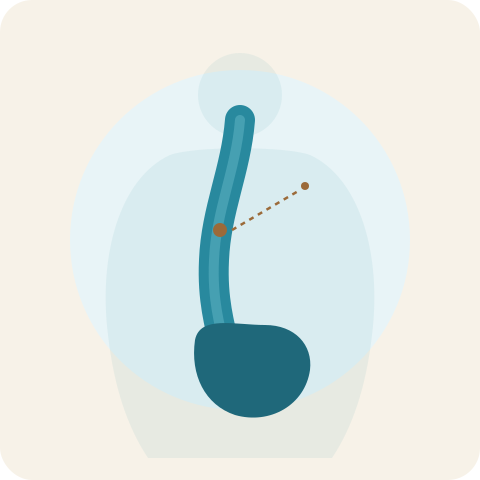
A narrowing of the esophagus that makes swallowing difficult. Most are benign and treated with a 10–15 minute endoscopic dilation.
Category
Common
Red flags
2
This article is educational and does not replace your doctor's advice. Seek urgent care for any red-flag symptoms.
What is it?
A stricture is a section of esophagus that has narrowed, usually from years of GERD inflammation, but sometimes from previous surgery, radiation, eosinophilic esophagitis, or — rarely — cancer.
How common is it?
Affects about 1 in 10 patients with severe long-standing GERD. More common in older adults.
Why does it happen?
Repeated acid injury triggers scarring of the esophagus wall. The scar tissue contracts over time and narrows the channel. Less commonly, pills (especially doxycycline, NSAIDs, bisphosphonates) cause local burns and strictures.
Symptoms
- Solid food gets stuck — usually meat, bread, or rice
- Liquids pass fine until later stages
- Slow eating, modifying diet to softer textures
- Heartburn (often the underlying cause)
- Weight loss in advanced cases
Red flags — seek urgent medical care
Cannot swallow saliva
Complete obstruction — emergency endoscopy.
Rapid weight loss with stricture
Need urgent investigation to rule out cancer.
How is it diagnosed?
Upper endoscopy is both diagnostic and therapeutic — the doctor sees and measures the narrow segment, takes biopsies to rule out cancer, and dilates it in the same session. Barium swallow can show the stricture if endoscopy isn't possible first.
Outlook — what to expect
Most strictures respond to dilation in 1–3 sessions. About 30% need repeat dilations over time. Aggressive PPI therapy reduces recurrence.
Treatment
Habits & Lifestyle
Habits prevent recurrence.
- Take pills standing up with a full glass of water — never lying down.
- Aggressive GERD control to prevent recurrence.
- Chew thoroughly; cut food small.
Diet
Soft diet between dilations may help.
- Soups, stews, scrambled eggs, soft fish.
- Avoid dry meat, dry bread, raw vegetables until dilation is complete.
Medications
PPIs are essential for peptic strictures.
- Daily PPI long-term to prevent recurrence — usually omeprazole or pantoprazole 20–40 mg.
Procedures & Surgery
Dilation is the primary treatment.
- Endoscopic balloon dilation or bougie dilation — usually 1–3 sessions, 1–2 weeks apart.
- Stent placement for strictures that re-narrow rapidly.
- Surgery is rare for benign strictures.
Questions to ask your doctor
Save this list or print it before your appointment — doctors appreciate prepared patients.
- How many dilations will I need?
- Should I be tested for Barrett's esophagus?
Medically reviewed by: SGA Patient Education Panel · Last reviewed 24/04/2026