
Eosinophilic Esophagitis (EoE)
An allergy-driven inflammation of the esophagus. The main symptom is food getting stuck. Diagnosed by endoscopy with biopsy; well-controlled with diet, PPIs, or steroids.
Category
Chronic
Red flags
2
This article is educational and does not replace your doctor's advice. Seek urgent care for any red-flag symptoms.
What is it?
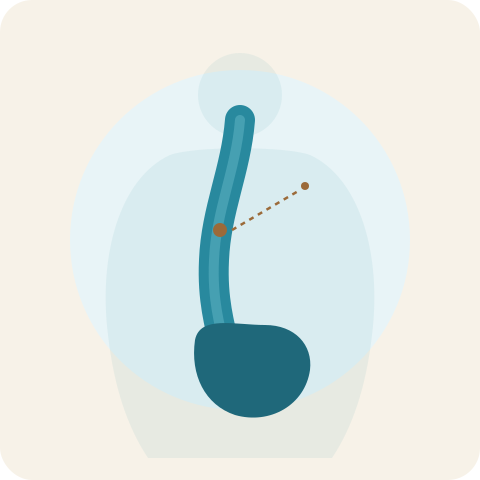
EoE is a chronic immune-driven disease of the esophagus where a specific white blood cell — the eosinophil — accumulates in large numbers in the esophagus wall. These cells release substances that cause swelling, scarring, and tightening of the esophagus over time. The result is difficulty swallowing solid foods.
Unlike GERD, EoE is not caused by stomach acid. It is more like a food allergy that affects the esophagus.
How common is it?
1 in 1,000–2,000 adults; rising rapidly worldwide. Most patients are men aged 20–50 with allergies, asthma, or eczema.
Why does it happen?
A food (usually milk, wheat, egg, soy, nuts, or seafood) or environmental allergen triggers an exaggerated immune response in the esophagus. There is a strong genetic component — EoE often runs in families.
Symptoms
- Food getting stuck (food impaction) — the hallmark symptom in adults
- Slow eating, lots of chewing, drinking water with every bite
- Heartburn that does not respond to PPIs
- Chest pain unrelated to the heart
- In children: vomiting, abdominal pain, poor weight gain
Red flags — seek urgent medical care
Food completely stuck — cannot swallow your own saliva
Emergency endoscopy needed to remove the food bolus.
Vomiting blood after a food impaction
Possible esophageal tear — go to the ED.
How is it diagnosed?
Diagnosis requires upper endoscopy with biopsies from the upper, middle, and lower esophagus — even if the esophagus looks normal. The lab counts eosinophils per high-power field; ≥15 eosinophils confirms EoE.
Allergy testing (skin prick or blood) helps identify food triggers but is not always reliable in adults.
What the latest science says
Dupilumab (Dupixent), a biologic injection, was FDA-approved for EoE in 2022 — a major advance for refractory cases. Several other biologics are in late-stage trials.
Outlook — what to expect
Excellent symptom control with appropriate treatment. Without treatment, repeated inflammation can cause esophageal narrowing and recurrent food impactions. EoE does not cause cancer.
Treatment
Habits & Lifestyle
Practical chewing and eating habits prevent food impactions.
- Cut food into small pieces and chew thoroughly.
- Sip water frequently during meals.
- Avoid eating dry, dense foods (bread without sauce, dry meat) on an empty esophagus.
- If food sticks, try standing up and walking; sip water; do NOT induce vomiting.
Diet
Identifying and removing trigger foods is one of the most effective treatments — but requires patience.
- Six-food elimination: avoid milk, wheat, egg, soy, nuts, and seafood for 6–8 weeks, then reintroduce one at a time with repeat endoscopies.
- Two-food elimination (milk + wheat) is a simpler alternative — works in over 40% of patients.
- Work with a dietitian familiar with EoE — DIY elimination diets are hard to do safely.
Medications
Medications work well — many patients prefer them to long-term diet restriction.
- PPIs (high dose, e.g. omeprazole 40 mg twice daily) — works in 30–50% of patients.
- Topical (swallowed) steroids — budesonide oral suspension or fluticasone inhaler swallowed (not inhaled). Highly effective.
- Dupilumab (Dupixent) — biologic injection every 1–2 weeks for severe or refractory cases.
Procedures & Surgery
Endoscopic dilation safely opens narrowed segments.
- Endoscopic dilation — 1-3 sessions, gradual stretching of the esophagus.
- Emergency endoscopy for impacted food — outcomes excellent if done within 24 hours.
Living with the condition
- Carry a card or phone note that says "I have eosinophilic esophagitis" in case of food impaction.
- Eat slowly in restaurants — people with EoE who eat fast are far more likely to have impactions.
Questions to ask your doctor
Save this list or print it before your appointment — doctors appreciate prepared patients.
- Should I try diet first or medication first?
- How often will I need follow-up endoscopies?
- Am I a candidate for dupilumab?
Medically reviewed by: SGA Patient Education Panel · Last reviewed 24/04/2026