

saudigastro.com/patients/dumping-syndrome
Category
Chronic
Red flags
5
This article is educational and does not replace your doctor's advice. Seek urgent care for any red-flag symptoms.
What is it?
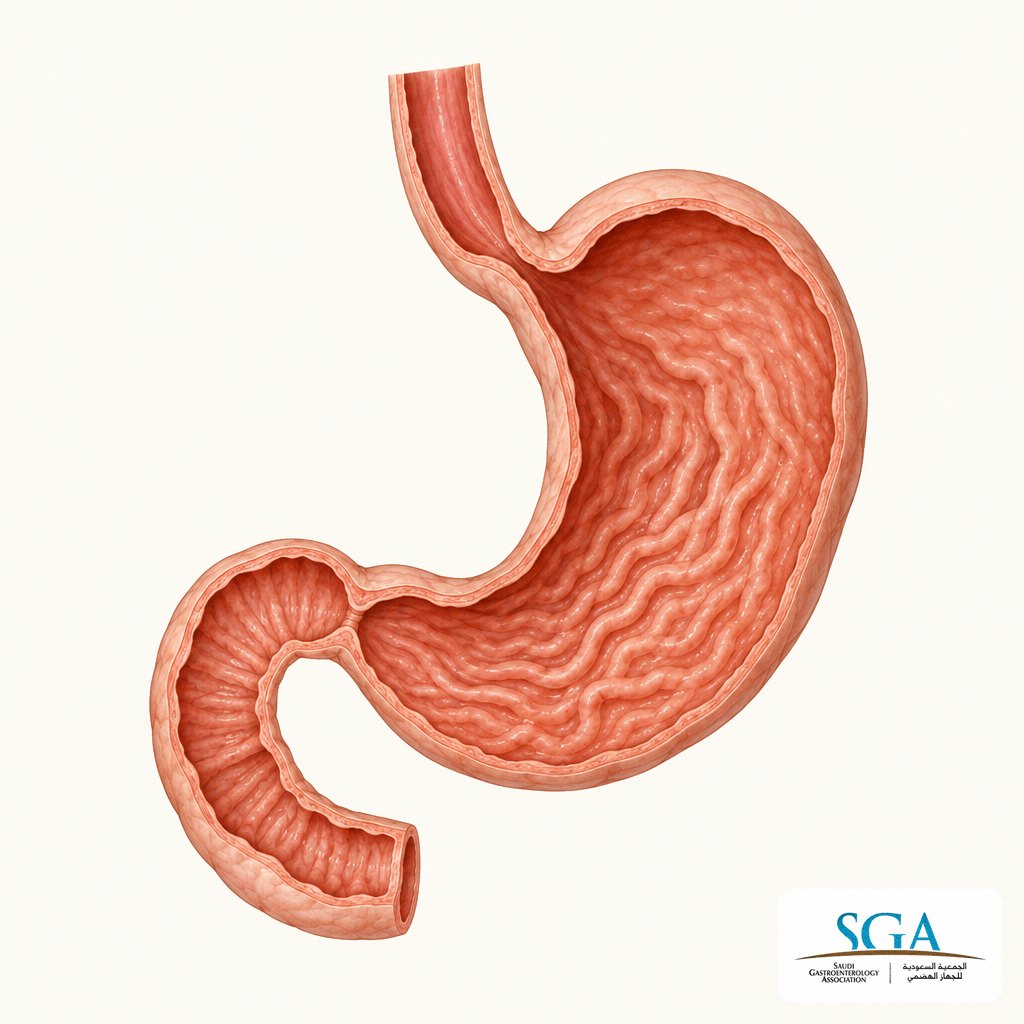
Dumping syndrome happens when food, especially sugary or very large meals, passes from the stomach into the small bowel much too quickly. It most often follows surgery on the stomach (such as gastrectomy, bariatric or weight-loss surgery, or esophageal surgery) that removes or bypasses the stomach's normal "valve" or reservoir. There are two patterns. Early dumping happens within about 30 minutes after eating, and late dumping happens 1 to 3 hours after eating. Some people have both.
How common is it?
It is a common problem after stomach surgery. Many people have mild symptoms that settle with time and diet changes, while a smaller number have longer-lasting or more severe symptoms.
Why does it happen?
In early dumping, a rush of concentrated food into the bowel pulls fluid into the bowel and triggers hormones and changes in blood flow. This causes cramps, diarrhea, a racing heart and dizziness. In late dumping, the sugar from food is absorbed very quickly, the body releases a surge of insulin, and blood sugar then falls too low (hypoglycemia). Risk factors are having had stomach surgery, eating large meals, and eating sugary or refined foods.
Symptoms
- Early: belly cramps, bloating, nausea and diarrhea soon after eating
- Early: flushing, sweating, a racing heartbeat, lightheadedness or feeling faint
- Late: sweating, shakiness, weakness, hunger and confusion 1 to 3 hours after eating
- Late: fainting or near-fainting due to low blood sugar
- Fear of eating, weight loss and poor nutrition in persistent cases
Red flags — seek urgent medical care
Fainting, confusion, a fit or being unable to wake up easily (possible very low blood sugar)
Emergency. Call emergency services. Do not give food or drink to someone who is unconscious.
Persistent vomiting, severe belly pain or a swollen belly
Could be a blockage or other surgical complication. Go to the emergency department.
Black stool or vomiting blood
Possible bleeding. Seek emergency care immediately.
Ongoing weight loss, severe weakness or signs of dehydration
Needs prompt medical review and nutritional support.
Repeated episodes of low blood sugar symptoms despite diet changes
Tell your doctor; treatment can be adjusted.
How is it diagnosed?
The diagnosis is usually based on your history: stomach surgery followed by typical symptoms after meals. A simple symptom questionnaire can help. Your doctor may arrange blood tests, a check for low blood sugar after meals, a stomach-emptying scan, or upper endoscopy to look for other problems such as a narrowing, ulcer or bile reflux that can cause similar symptoms. A glucose drink test is sometimes used but may be unpleasant and is done only under medical supervision.
What the latest science says
Diet change remains the first and most effective step. For people who need more, some medicines can slow the movement of food or blunt the insulin surge. Surgical revision is a last option for rare, severe cases. Research is ongoing into newer treatments for late dumping.
Outlook — what to expect
Many people improve over weeks to months as the body adapts, and most can control symptoms with diet changes. A smaller group needs medicine or further treatment. Good nutrition and follow-up protect against weight loss and vitamin deficiency.
Treatment
Habits & Lifestyle
Small changes in how you eat make a big difference.
- Eat 6 small meals a day instead of 3 large ones.
- Eat slowly and chew well.
- Lie down or rest for 15 to 30 minutes after meals if it helps early symptoms.
- Keep a food and symptom diary to find your triggers.
- If you have diabetes, tell your team that you have dumping, as it affects blood sugar planning.
Diet
Diet is the main treatment. A dietitian can personalise the plan and check for vitamin and mineral deficiencies.
- Avoid simple sugars: sweets, sugary drinks, juices, honey, dates in large amounts and desserts.
- Choose protein and complex carbohydrates (whole grains, vegetables) at every meal.
- Drink fluids between meals rather than with meals, usually stopping about 30 minutes before and after eating.
- Soluble fibre (such as oats or pectin-type fibre) can slow absorption; ask your dietitian.
- If low blood sugar occurs, treat it as advised by your doctor, then review your plan with them.
Medications
Most people are managed with diet. Medicines are added if symptoms persist. Your doctor decides and monitors them.
- Fibre supplements may help slow how fast food is absorbed.
- Medicines that slow bowel movement or reduce the insulin surge may be used for persistent symptoms.
- Injections that slow gut hormones (somatostatin-type medicines) are sometimes used in severe cases under specialist care.
- Do not start these on your own; they have side effects and need supervision.
Procedures & Surgery
Procedures are only for the few people who do not improve with diet and medicine.
- Endoscopy may be used to check for narrowing or ulcers that mimic dumping.
- Feeding through a tube placed in the small bowel may be used temporarily if nutrition is poor.
- Revision or reversal of the original surgery is considered only in rare, severe, long-lasting cases after careful assessment.
Living with the condition
- Symptoms often improve with time, so be patient and keep to your meal pattern.
- Regular blood tests help check vitamins such as B12, iron and vitamin D.
- Share your plan with family and caregivers so meals and gatherings are easier.
In the Saudi context
Dates, sweet tea, Arabic coffee with sugar and traditional desserts can trigger symptoms. Ask your dietitian how to plan iftar and suhoor if you wish to fast in Ramadan, and whether fasting is advisable for you, particularly if you have low blood sugar episodes.
Questions to ask your doctor
Save this list or print it before your appointment — doctors appreciate prepared patients.
- Is this dumping syndrome or something else?
- Can you refer me to a dietitian?
- How long will symptoms last?
- Do I need medicine or other tests?
- How should I treat low blood sugar episodes?
Was this guide helpful?
Status: Approved for publication by SGA; individual clinician review is ongoing · Published 24/04/2026
For general education only; it does not replace your doctor’s advice. Individual clinician review of this guide is ongoing. SGA clinician? Review this guide