

saudigastro.com/patients/colonic-volvulus
Category
Serious
Red flags
4
This article is educational and does not replace your doctor's advice. Seek urgent care for any red-flag symptoms.
What is it?
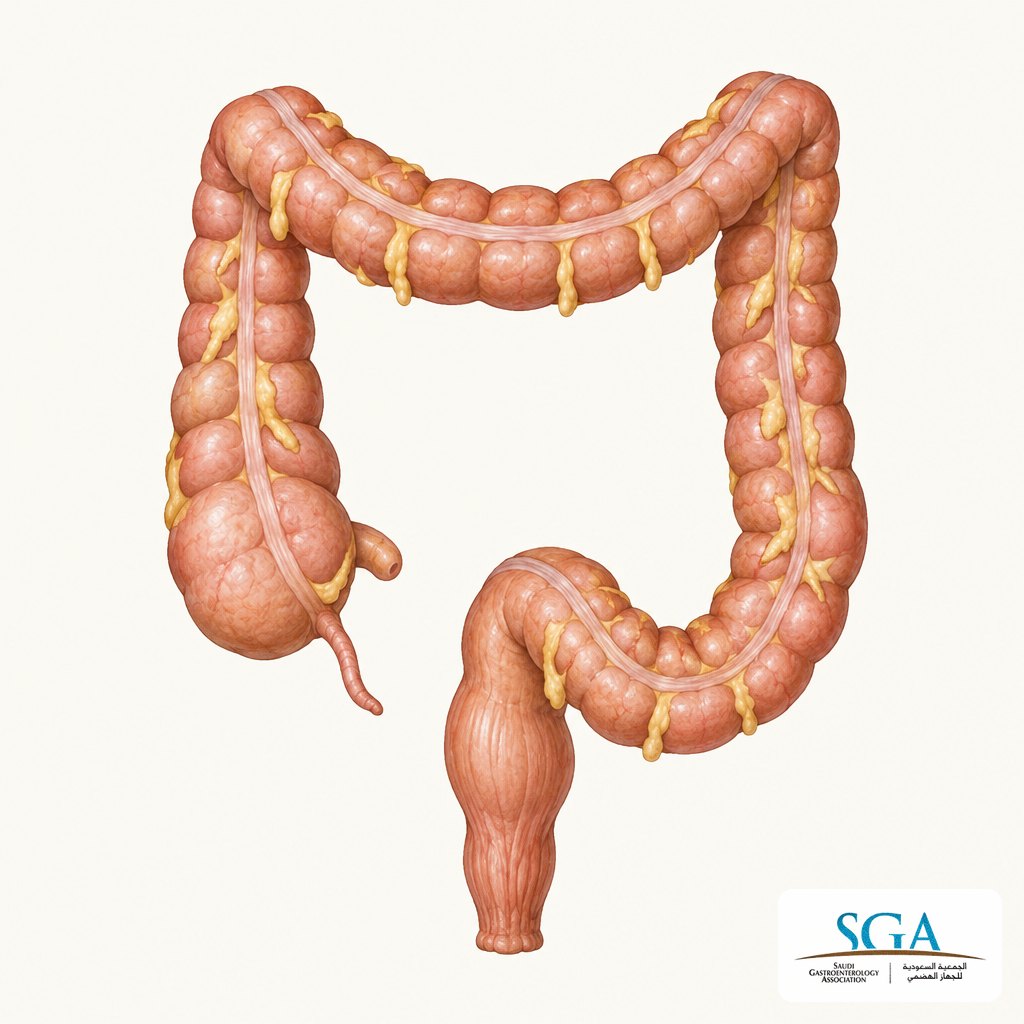
A volvulus happens when a loop of the colon twists around its own attachment to the abdominal wall. The twist closes the bowel like a knot in a balloon, so gas and stool cannot pass, and the twisted part can lose its blood supply. The two most common sites are the sigmoid colon (the last S-shaped part before the rectum) and the cecum (the first part of the colon on the right side).
How common is it?
It is an uncommon cause of bowel obstruction. It is seen mostly in older adults, especially those with long-standing constipation, those living in care homes, and people with neurological or psychiatric conditions. It can occasionally occur in younger people and during pregnancy.
Why does it happen?
A long, loose colon with a narrow attachment is more likely to twist. Chronic constipation, a very long sigmoid colon, previous abdominal surgery, and some medicines that slow the bowel can contribute. Often there is no single clear cause.
Symptoms
- Sudden or gradually worsening cramping abdominal pain
- A swollen, tight abdomen (bloating)
- Not being able to pass stool or gas
- Nausea and vomiting
- Previous similar episodes that settled by themselves
- Constant pain, fever or a fast heartbeat if the bowel is damaged
Red flags — seek urgent medical care
Severe constant abdominal pain, or pain that suddenly gets worse
The bowel may be losing its blood supply or may have torn. Go to the emergency department now.
A very swollen belly with repeated vomiting and no gas or stool
This suggests a complete blockage. Call emergency services or go to hospital immediately.
Fever, fast heartbeat, dizziness, or confusion
Signs of serious illness or infection. Needs emergency care.
Blood in the stool along with severe pain
May show damage to the bowel wall. Emergency assessment is needed.
How is it diagnosed?
Doctors examine the abdomen and often order an abdominal X-ray, which can show a very dilated loop of bowel. A CT scan is the most reliable test and shows the twist and whether the bowel is damaged. Blood tests check for infection, dehydration and signs of poor blood supply.
Outlook — what to expect
Outcome depends mainly on how quickly the problem is treated and whether the bowel is damaged. When treated early, many people do well. Sigmoid volvulus often comes back after the first untwisting, so doctors usually recommend surgery to prevent recurrence in people who are fit enough. Delay in treatment increases the risk of serious complications.
Treatment
Habits & Lifestyle
Volvulus is an emergency; there is no home treatment for an attack. These points apply to recovery and prevention.
- Do not wait at home hoping it will pass if you have the red-flag symptoms.
- Treat constipation early and keep regular bowel habits.
- Keep active and walk daily as your health allows.
- Carers of older or bed-bound people should monitor bowel movements and report changes.
Diet
Nothing should be eaten or drunk during an attack until the doctors decide. Afterwards, diet helps prevent constipation.
- In hospital you may be kept nil by mouth and given fluids through a drip.
- After recovery, increase fibre gradually with vegetables, fruit and whole grains.
- Drink enough fluids through the day unless your doctor has limited them.
Medications
Medicines support treatment but do not untwist the bowel.
- In hospital you may receive intravenous fluids, pain relief and antibiotics if there is concern about infection or damaged bowel.
- Ask your doctor to review medicines that slow the bowel, such as some opioid pain relievers and anticholinergics.
- Your doctor may advise a laxative plan after recovery to prevent constipation.
Procedures & Surgery
Treatment depends on the site and on whether the bowel is damaged.
- Sigmoid volvulus without damage can often be untwisted with a flexible scope passed through the back passage (endoscopic decompression).
- Emergency surgery is needed if the bowel is damaged, has perforated, or cannot be untwisted by scope.
- After the first episode, planned surgery to remove the affected loop is often recommended to prevent recurrence; your surgeon will explain the options.
- Cecal volvulus usually needs surgery.
Questions to ask your doctor
Save this list or print it before your appointment — doctors appreciate prepared patients.
- Which part of my colon twisted, and was the bowel damaged?
- Is surgery recommended to prevent it from happening again?
- What are the risks of surgery for me, and of not having surgery?
- Which of my medicines could slow my bowels?
- What symptoms mean I should come straight back to hospital?
Was this guide helpful?
Status: Approved for publication by SGA; individual clinician review is ongoing · Published 24/04/2026
For general education only; it does not replace your doctor’s advice. Individual clinician review of this guide is ongoing. SGA clinician? Review this guide