

saudigastro.com/patients/biliary-dyskinesia
Category
Common
Red flags
4
This article is educational and does not replace your doctor's advice. Seek urgent care for any red-flag symptoms.
What is it?
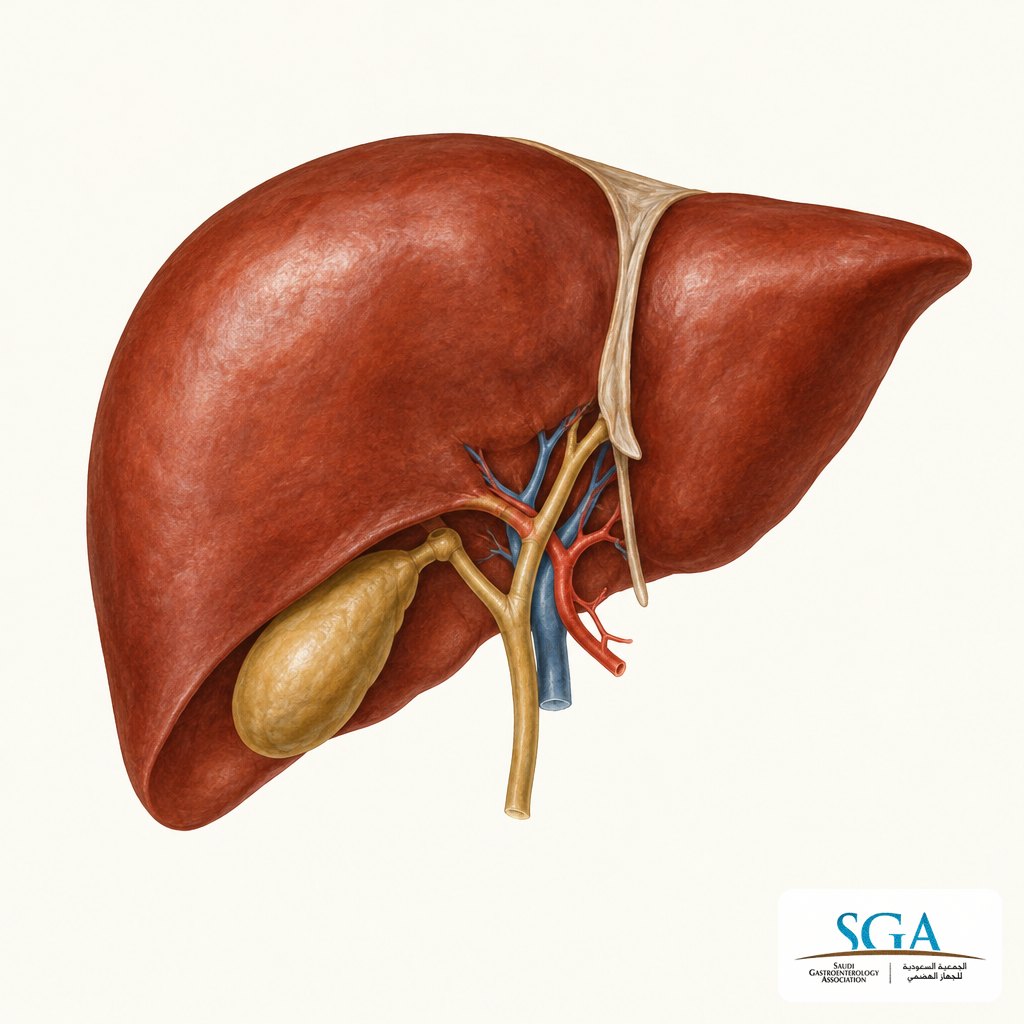
Biliary dyskinesia ("dys" means abnormal, "kinesia" means movement) describes pain that feels like gallbladder pain even though scans show no stones. The idea is that the gallbladder does not empty properly (gallbladder dyskinesia) or that the valve at the end of the bile duct does not relax properly (sphincter of Oddi dysfunction). Doctors treat it as a diagnosis of exclusion: other, more common causes of upper belly pain, such as ulcers, reflux, pancreas problems or hidden stones, must be ruled out first.
How common is it?
It is a less common cause of gallbladder-type pain than gallstones. Diagnosis varies between centres, and experts continue to debate how best to define and treat it.
Why does it happen?
The exact cause is not clear. Possible explanations include weak or poorly coordinated gallbladder contractions, a very sensitive nerve supply in the bile system, or spasm or tightness of the sphincter of Oddi (the small muscle valve where the bile and pancreatic ducts empty into the intestine). In some people it appears after the gallbladder has been removed.
Symptoms
- Episodes of pain in the upper right or upper middle belly, often 30 minutes or longer
- Pain that may spread to the back or shoulder blade
- Pain often after meals, especially fatty ones, but not always
- Nausea, sometimes vomiting
- Bloating and feeling full early
- Normal blood tests and no stones on ultrasound
Red flags — seek urgent medical care
Fever or chills with pain
Suggests infection or inflammation rather than dyskinesia. Go to the emergency department.
Yellow skin or eyes, dark urine or pale stools
A blocked bile duct. Needs urgent assessment.
Severe pain going through to the back with repeated vomiting
May be pancreatitis. Seek emergency care.
Black stools, vomiting blood, difficulty swallowing, or unintended weight loss
These are not typical of dyskinesia and need prompt investigation for another cause.
How is it diagnosed?
Your doctor first looks for other causes: blood tests including liver and pancreas enzymes, an ultrasound for stones, and often an upper endoscopy (a camera passed through the mouth to look at the gullet, stomach and first part of the intestine) and sometimes a CT or MRI. If no cause is found, a HIDA scan may be done. This is a nuclear medicine test in which a small amount of a tracer is injected and a scanner measures how well the gallbladder empties, shown as an "ejection fraction". A low value supports the diagnosis, but results are not perfect and must be interpreted with your symptoms.
Outlook — what to expect
Outcomes vary. Some people improve with diet and symptom treatment, and some have lasting relief after gallbladder removal, particularly when the scan shows a poorly emptying gallbladder and the pain is typical. Because results are not guaranteed, decisions about surgery should be made carefully with a specialist.
Treatment
Habits & Lifestyle
There is no single habit that cures this condition, but these can help you manage and track symptoms.
- Keep a diary of pain, meals and triggers to help your doctor
- Manage stress and sleep; the gut and brain are closely linked
- Do not smoke and avoid excess alcohol
- Aim for a healthy weight with gradual changes
Diet
Some people find that meal size and fat content affect their pain.
- Try smaller, more frequent meals
- Reduce very fatty or fried foods if they trigger pain
- Do not cut out whole food groups without advice, to avoid poor nutrition
Medications
Medicines are used to ease symptoms. Your doctor decides what is appropriate; evidence for medicines in this condition is limited.
- Anti-spasm medicines or medicines for nausea may be tried
- Medicines that change pain signals from the gut (such as low-dose nerve-modulating medicines) are sometimes used in selected people
- Avoid opioid pain medicines where possible, as they can tighten the sphincter and worsen pain
Procedures & Surgery
Procedures are considered only after careful testing and discussion.
- Cholecystectomy (gallbladder removal) may be offered when the symptoms are typical, other causes are excluded and the HIDA scan is abnormal
- ERCP with sphincterotomy (cutting the sphincter muscle) is used only in selected people with proven sphincter problems, because it carries a risk of pancreatitis
- Your team will explain benefits, limits and risks before any procedure
Questions to ask your doctor
Save this list or print it before your appointment — doctors appreciate prepared patients.
- What other causes of my pain have been ruled out?
- What does my gallbladder scan result mean?
- How likely is surgery to help in my situation?
- Are there non-surgical options to try first?
Was this guide helpful?
Status: Approved for publication by SGA; individual clinician review is ongoing · Published 24/04/2026
For general education only; it does not replace your doctor’s advice. Individual clinician review of this guide is ongoing. SGA clinician? Review this guide