

saudigastro.com/patients/anal-cancer
Category
Serious
Red flags
5
This article is educational and does not replace your doctor's advice. Seek urgent care for any red-flag symptoms.
What is it?
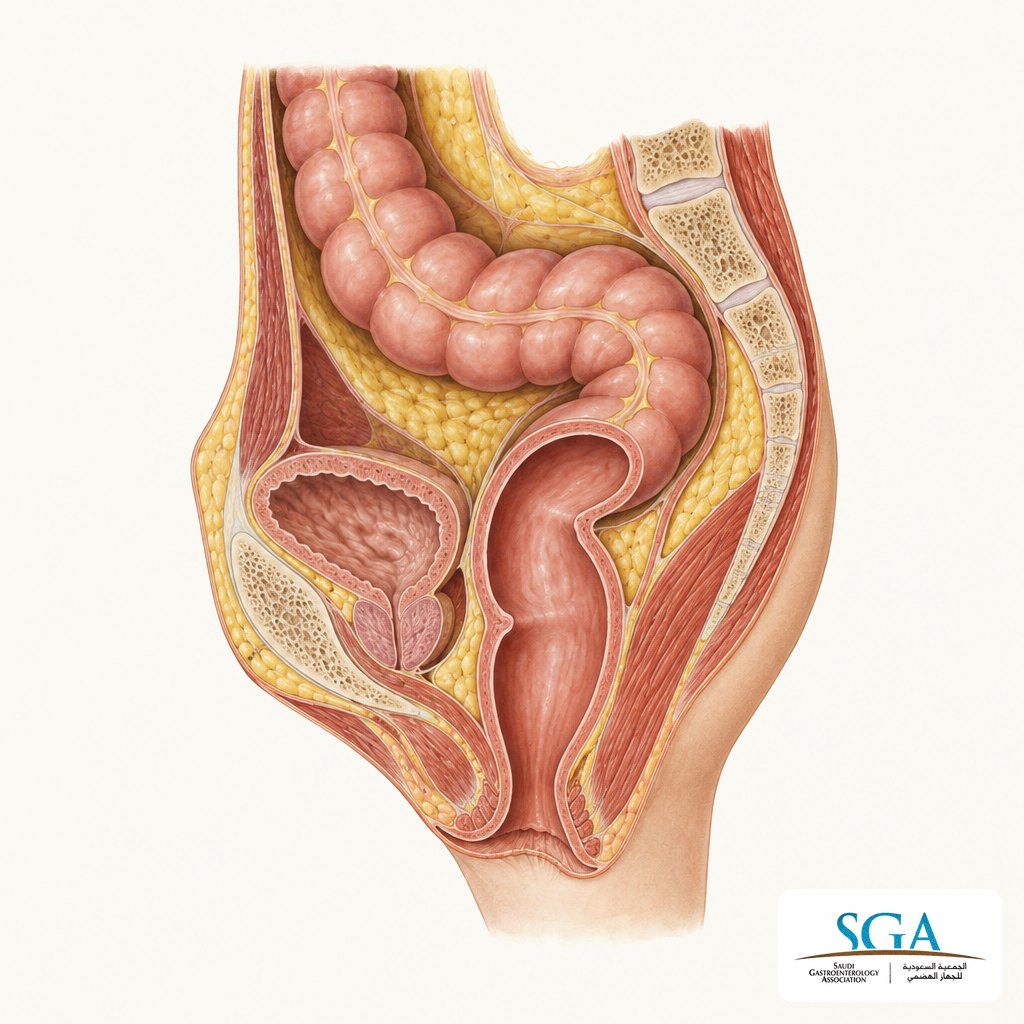
The anal canal is the last few centimetres of the digestive tract, ending at the anus, the opening through which stool leaves the body. Anal cancer begins when cells lining this canal or the skin around the opening grow out of control. The most common type is squamous cell carcinoma (a cancer of flat surface cells). Anal cancer is different from colon or rectal cancer and is treated differently.
How common is it?
Anal cancer is uncommon compared with other digestive cancers. It occurs more often in people with long-term HPV infection, with a weakened immune system (for example HIV or after organ transplant), and in smokers.
Why does it happen?
Most anal cancers are linked to persistent infection with high-risk types of human papillomavirus (HPV), a very common virus passed on through close skin-to-skin and sexual contact. Most HPV infections clear by themselves, but in some people they last and slowly change the cells. Smoking, a weakened immune system, and a history of long-standing anal conditions or of other HPV-related cancers add to the risk. Having one of these risk factors does not mean you will develop cancer.
Symptoms
- Bleeding from the anus or blood on the toilet paper
- A lump, growth or swelling at or inside the anus
- Pain, pressure or a feeling of fullness in the anal area
- Itching or discharge from the anus
- A change in bowel habit, narrower stools or difficulty controlling bowel movements
- Swollen lumps in the groin
- Many people have no symptoms at first, and symptoms can be mistaken for haemorrhoids
Red flags — seek urgent medical care
Rectal bleeding that is new, continues, or is mixed with other symptoms
Should always be examined and not simply put down to piles. See a doctor soon. If bleeding is heavy or you feel faint, go to the emergency department.
An anal lump or sore that does not heal or keeps growing
Needs prompt examination and possibly a biopsy.
Persistent anal pain, or new leakage of stool or inability to control bowel movements
May mean the cancer or another problem is affecting the muscles. Arrange a medical review.
Unexplained weight loss, tiredness or lumps in the groin
Could mean the disease has spread to lymph nodes. See a doctor promptly.
Severe pain, fever, or being unable to pass stool or wind
Could be an infection or a blockage. Go to the emergency department.
How is it diagnosed?
The doctor examines the anus and performs a gentle digital rectal examination (using a gloved finger), and looks inside with a short scope (anoscopy). Suspicious areas are biopsied (a small tissue sample examined under the microscope), which is how the diagnosis is made. Scans such as MRI of the pelvis, CT of the chest and abdomen, or PET-CT show how far the cancer extends. Blood tests, including HIV testing in some people, may be advised. Results are usually discussed by a team of cancer specialists.
What the latest science says
For most people with anal cancer that has not spread far, the standard treatment is a combination of radiotherapy and chemotherapy, which often cures the cancer and keeps the anus and bowel control in place, so surgery is often kept for cases that do not respond or return. Screening of high-risk groups for pre-cancerous changes and HPV vaccination are active areas; ask your doctor whether they apply to you.
Outlook — what to expect
Outlook depends on the size of the cancer and whether it has spread, but anal cancer found at an early stage is often curable. Treatment can cause side effects and recovery takes time, so support from the cancer team, a dietitian and sometimes a pelvic-health therapist matters. Follow-up visits are needed after treatment.
Treatment
Habits & Lifestyle
There is no home treatment for cancer; the following support your treatment and wellbeing.
- See a doctor early for any anal bleeding, lump or pain instead of waiting
- Stop smoking; it raises the risk and makes treatment harder
- Take care of the skin around the anus during and after radiotherapy as your team advises
- Keep all appointments, including follow-up examinations and scans
- Talk about worries and ask for emotional and practical support
Diet
Eating well helps you cope with treatment. A dietitian can tailor advice to you.
- Eat small, regular, balanced meals with enough protein
- Drink plenty of fluids, especially if you have diarrhoea during treatment
- If treatment causes diarrhoea or soreness, ask the team which foods to adjust
- Tell your team if you are losing weight or cannot eat
Medications
Chemotherapy is given together with radiotherapy for most anal cancers. Your cancer team decides the plan.
- Chemotherapy medicines given with radiotherapy (chemoradiotherapy)
- Medicines to prevent nausea, control diarrhoea and relieve pain during treatment
- Treatment for advanced disease may include other chemotherapy or immunotherapy, chosen by the oncology team
- Do not start herbal or supplement products without checking with your team
Procedures & Surgery
Radiotherapy is the main local treatment; surgery is used in selected situations.
- Radiotherapy to the anal area and nearby lymph nodes, usually over several weeks
- Local removal for very small, early skin cancers around the anus in selected cases
- Major surgery, which may include a stoma (a bowel opening on the belly), if the cancer remains or returns after chemoradiotherapy
- Regular follow-up examinations and scans after treatment
Living with the condition
- Treatment can affect bowel control, sexual function and fertility; ask about support and rehabilitation
- Feeling worried or low is common; counselling and support groups can help
- Never feel ashamed; HPV is very common and anal cancer is not a sign of any fault
Questions to ask your doctor
Save this list or print it before your appointment — doctors appreciate prepared patients.
- What type and stage is my cancer?
- What treatment do you recommend and what is the aim?
- What side effects should I expect and how will you help me manage them?
- Will treatment affect my bowel control or fertility?
- Should my partner or family members be checked or vaccinated against HPV?
- What follow-up will I need?
Was this guide helpful?
Status: Approved for publication by SGA; individual clinician review is ongoing · Published 24/04/2026
For general education only; it does not replace your doctor’s advice. Individual clinician review of this guide is ongoing. SGA clinician? Review this guide